REVIEW · NEW YORK CITY
How Money Was Made Wall Street Walking Tour
Book on Viator →Operated by Inside Out Tours LLC · Bookable on Viator
Wall Street has better stories than stock prices. This walking tour strings together US financial history through the Financial District’s landmarks, from an Alexander Hamilton-era custom house to the church where he’s buried.
I really like the guide-driven approach here. When Jess (a former lawyer with the SEC) explains how rules shape markets, the facts land fast; and Maia’s style is easy to follow too, with clear volume, a real Q-and-A flow, and no need for bulky headphones.
One consideration: this is mostly exterior viewing, and you do not go inside the NYSE, so it is not a ticket to behind-the-scenes vault life.
In This Review
- Key Highlights You’ll Notice Right Away
- Why a 2-Hour Financial District Walk Makes Sense
- Price and Value: What $49 Actually Covers
- Start at Bowling Green: Early Commerce Before the Trading Floor
- Stop 1: Alexander Hamilton Custom House at the National Museum of the American Indian (Exterior)
- Stop 2: Bowling Green Park (Free)
- Stop 3: Battery Park (Free)
- Charging Bull to Fraunces Tavern: Symbols and Meetings
- Stop 4: Charging Bull (Free)
- Stop 5: Fraunces Tavern Museum (Exterior)
- Wall Street Proper: NYSE, Federal Hall, Trinity Church, JP Morgan
- Stop 6: Wall Street (Exterior)
- The Federal Reserve Stop: What You Can Learn From Outside
- Stop 7: Federal Reserve Bank of New York (Exterior)
- Trinity Church and Alexander Hamilton: The Tour’s Final Anchor
- The ending: Trinity Church (Oldest congregation in NYC; Hamilton burial)
- How the Guide Makes It Click (Jess and Maia Examples)
- What You Should Expect on the Ground
- Who This Tour Is For (and Who Might Skip It)
- Should You Book It?
- FAQ
- FAQ
- How long is the How Money Was Made Wall Street Walking Tour?
- How much does the tour cost?
- Where do I meet the tour, and where does it end?
- Is entry to the New York Stock Exchange included?
- Are admission tickets included for the National Museum of the American Indian or Fraunces Tavern Museum?
- What is the cancellation policy?
Key Highlights You’ll Notice Right Away
- SEC-grade perspective with Jess: one guide is a former SEC lawyer, so you get policy-and-practice context, not just trivia.
- No required headphones: Maia’s tour approach keeps you listening to the guide and asking questions without extra gear.
- Hamilton shows up early and late: you’ll see his custom house exterior and later end at Trinity Church, tied to his burial.
- Trade and money start before Wall Street: Bowling Green and Battery Park help you understand how the city’s commerce began.
- Central banking explained from the sidewalk: the Federal Reserve Bank stop focuses on what the vaults do, even from outside.
- Compact 2-hour route: it fits into a busy day and still covers a lot of major sites.
Why a 2-Hour Financial District Walk Makes Sense
New York’s Financial District can feel like a blur of towers and tour groups. This tour gives that area a timeline, so you stop seeing buildings as random backdrops. You start with the early commercial world, then move toward modern institutions like the New York Stock Exchange and the Federal Reserve.
The pacing helps. At about 2 hours long, you can plug it into almost any itinerary without losing half your day. The group size is capped at 30 travelers, which means you usually have room to hear the guide and ask questions.
If you care about politics, economics, or how money affects real life, you’ll probably enjoy the angle. Instead of focusing only on what happened, you’ll hear why systems were built the way they were, and how that shows up in the streets you’re walking.
You can also read our reviews of more walking tours in New York City



Price and Value: What $49 Actually Covers
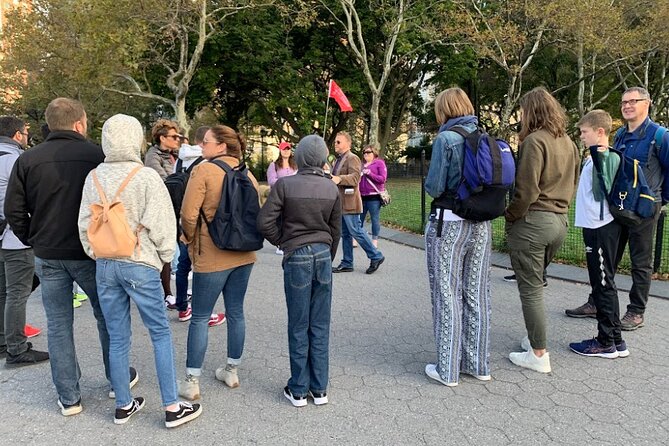
At $49 per person, you’re paying mainly for the licensed guide and the storyline. The tour also points you to key exteriors around Wall Street, plus a couple of stops tied to major public institutions.
Here’s the practical part: entry into the NYSE is not included. Many stops are free to view from the outside, including the Charging Bull, Bowling Green, Battery Park, and the Wall Street exterior sights. That keeps your costs under control.
Two stops note admission is not included: the National Museum of the American Indian (shown via exterior viewing on this route) and Fraunces Tavern Museum (also exterior). If you want to go inside those places, you should expect to pay separately and plan extra time.
So, is it good value? For me, the “yes” case is simple. You are getting guided interpretation of iconic buildings and the moments that shaped the financial system, all in a short format that slots into a packed trip. If you only want museum entry tickets and indoor time, you may feel under-satisfied. This is built for street-level understanding.
Start at Bowling Green: Early Commerce Before the Trading Floor
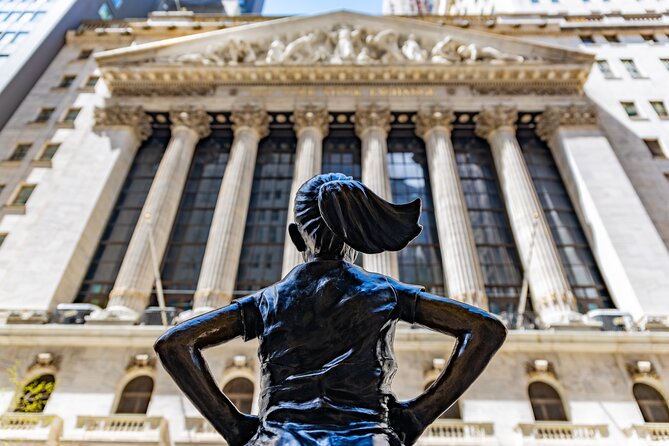
The tour begins at 1 Bowling Green, and that is a smart opener. It’s easy to start on Wall Street, but this route starts where the city’s early public space helped support commerce.
Stop 1: Alexander Hamilton Custom House at the National Museum of the American Indian (Exterior)
You’ll see the building now associated with the National Museum of the American Indian, but the architecture and origins matter here. The structure traces back to 1907, and it’s described as a Beaux-Arts treasure commemorating the rise of trade and commerce in New York.
What I like about this opening is the reframing. The financial story isn’t only about money machines and stock prices. You get a sense of how trade grew through big institutions tied to immigration, global movement, and shifting power. The museum’s connection to Native American art and artifacts adds another layer to the same city that later built the modern finance brand.
Heads-up: this stop is an exterior visit and admission is not included. If you want the museum experience itself, you’ll need separate entry planning.
Stop 2: Bowling Green Park (Free)
Next comes Bowling Green, New York City’s oldest park. The Dutch called the area the Plain, and they used it for everything from a parade ground to a meeting place and even a cattle market.
That might sound like a detour, but it’s actually the point. Before Wall Street became a name people recognize worldwide, the area was part of daily civic life. You’re learning how a place transitions from public ground to financial center, and the guide should help connect those dots while you walk.





Stop 3: Battery Park (Free)
Then you move to Battery Park, which has served key roles for more than 200 years. The focus here is on how the waterfront supported defense, recreation, and—most importantly—immigration.
Even from the sidewalk, this stop helps you understand a major driver behind finance: people arriving, goods moving, and governments needing systems that can handle both. In practical terms, it is also a good place to catch your breath and reset your walking pace before the more iconic Wall Street sights.
You’ll also get mention of the Netherland Monument in Battery Park as part of the included tour elements.
Charging Bull to Fraunces Tavern: Symbols and Meetings
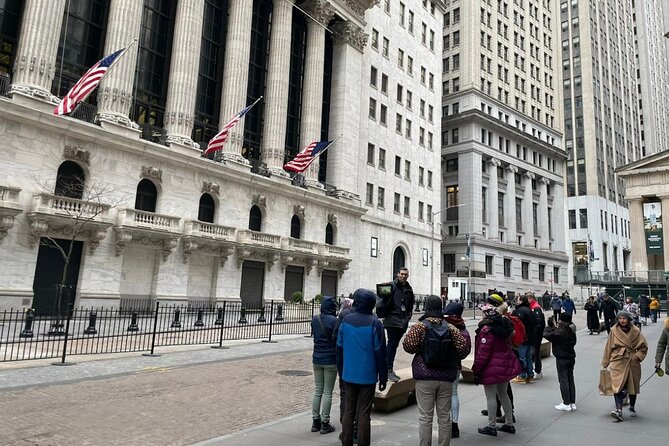
Now the tour starts turning up the volume on recognizable Wall Street imagery—but it doesn’t treat it as only photo ops.
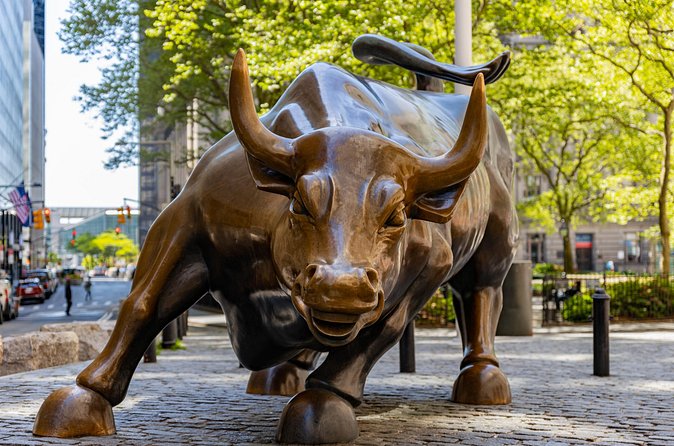
Stop 4: Charging Bull (Free)
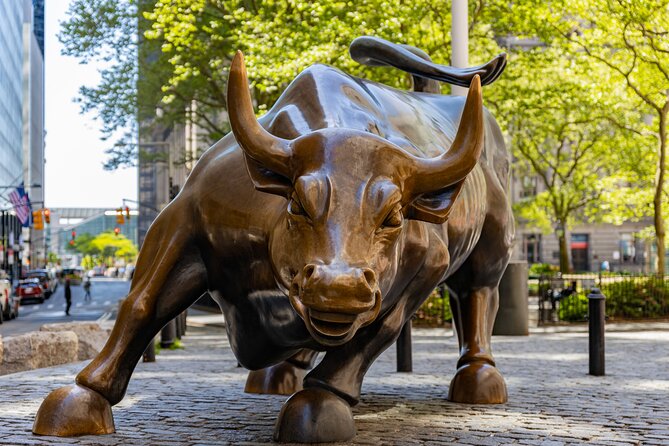
The Charging Bull is quick to spot, and it’s quick to stop at. The guide frames it as a symbol of Wall Street’s strength and resilience, which is useful because it helps you interpret why this statue became such a cultural magnet.
Practical note: this area can be crowded, so keep your expectations realistic. Your value is in how the guide connects the symbol to the market mindset, not in getting a clear solo photo for the cover of a finance magazine.
Stop 5: Fraunces Tavern Museum (Exterior)
Fraunces Tavern is one of those places where you can feel the shift from early politics to the financial system that followed. This stop is outside the museum, but the background is the story: it served as headquarters for George Washington, hosted peace negotiations with the British, and later housed federal offices during the early republic.
Why this matters for money lovers: you’re not just learning about markets. You’re seeing how governments and diplomacy feed into the confidence and structure that finance needs to function.
Admission is not included for the museum portion, and it’s presented as an exterior visit on this route, so plan on it as a context stop.
Wall Street Proper: NYSE, Federal Hall, Trinity Church, JP Morgan
At this point the tour enters the stretch where almost every building has a financial legend attached. You’ll explore the site area in an exterior-focused way.
Stop 6: Wall Street (Exterior)
You’ll cover the broader Wall Street area, including the New York Stock Exchange (not entered), Federal Hall, Trinity Church, and the JP Morgan Building.
Here’s what I’d watch for: the guide should help you connect those names to the evolving purpose of the city’s money system. Federal Hall is tied to early governance, Trinity Church connects to the early financial thinker who shaped the system, and JP Morgan represents the later wave of high-powered private finance. The NYSE is the public face of modern trading, but the tour makes sure you see it as part of a bigger chain.
Expectation check: NYSE entry is not part of the tour, so you won’t get inside the main trading floors.
The Federal Reserve Stop: What You Can Learn From Outside

Stop 7: Federal Reserve Bank of New York (Exterior)
This is where the financial nerd factor gets strong. Even as an exterior visit, the guide explains what happens below ground. The Federal Reserve Bank of New York is known for highly secured vaults for the largest reserve of foreign-held gold bullion.
Even if you never see inside, this is a powerful concept stop. It shows how money systems rely on trust and storage—how physical reserves connect to financial confidence. You’re learning that finance is not just paperwork and screens; it has always been about tangible security too.
Trinity Church and Alexander Hamilton: The Tour’s Final Anchor
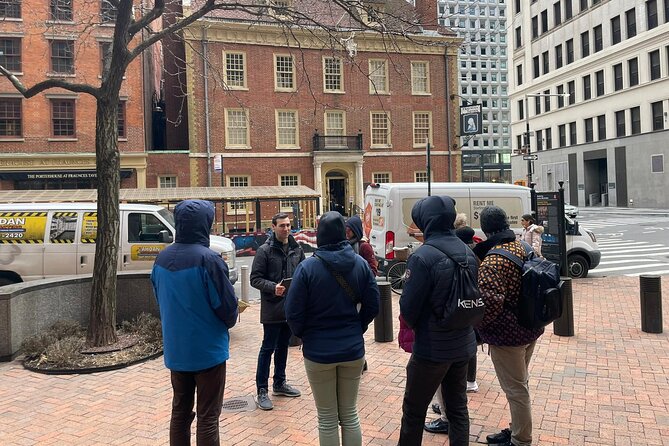
The ending: Trinity Church (Oldest congregation in NYC; Hamilton burial)
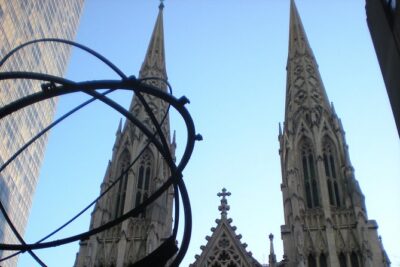
The tour ends at Trinity Church at 89 Broadway, and the guide ties the location to the oldest congregation in New York City. Trinity Church is also identified here as the burial site of Alexander Hamilton, described as the father of the financial system.
This ending works because it pulls you back to the big theme: the financial system wasn’t invented out of thin air. It grew from early institutions, public decisions, trade needs, and people who shaped policy.
If Hamilton is a name you associate mostly with school history, this tour can turn that connection into street-level understanding. You’re finishing at a real landmark that anchors the story.
How the Guide Makes It Click (Jess and Maia Examples)

A walking tour lives or dies on the guide, and this one has strong proof points.
With Jess, you get a lawyer’s perspective tied to the SEC. That kind of background matters because financial history can turn into dry dates fast. Instead, the guide’s job is to explain why regulations, oversight, and institutional design affect what markets do in practice.
With Maia, the praised style is practical and friendly. You’ll likely experience a guide who speaks clearly for the full group for the whole two hours, and who makes space for questions. One thing that stands out in the feedback is that you are not forced into headphones. That matters more than people think: it keeps you connected to the guide’s pace and it avoids the usual awkwardness of bulky gear in a tight walking schedule.
So if you like asking questions—about how a system worked then, and how it still affects today—this route is set up to support that.
What You Should Expect on the Ground
This tour is designed for a moderate pace and moderate physical fitness, with about a 2-hour walk around the area. Since you’ll be on your feet, bring comfortable shoes and plan for the usual city weather. In the Financial District, shade and benches can be limited, so a water bottle is never a bad idea.
Most stops are outside, so you’re looking at façades, plazas, parks, and street corners. That can be a plus if you want context fast. It can be a disappointment if your dream day includes lots of interior time.
It also helps to know that the key iconic sights are real but brief:
- Charging Bull is about meaning and context.
- NYSE is about where the institution sits, not about entry.
- Federal Reserve is about the vaults and their role, not a peek behind secured doors.
In other words, you get stories, orientation, and a clearer mental map of how the place works.
Who This Tour Is For (and Who Might Skip It)
You’ll probably love this if you:
- want a politics-and-economics angle in a short window
- are curious about Alexander Hamilton beyond a textbook reference
- enjoy learning how public institutions connect to the finance world
- like asking questions and getting straight answers from a guide
You may want to choose something else if you:
- mainly want indoor museum time and NYSE entry
- are looking for a purely architectural walking tour with fewer system-and-policy links
- hate walking in busy districts for a sustained two hours
Should You Book It?
My take: book it if you want a smart, compact way to understand Wall Street’s story without spending a whole day on logistics. At $49, the value comes from what a strong guide can do with the street-level setting—especially when the explanation includes real-world regulatory experience and a Q-and-A-friendly style.
If your priority is entering buildings, going inside the NYSE, or spending hours in museums, then treat this tour as the best pre-game. Pair it with separate museum tickets or other indoor stops you choose based on your interests.
FAQ
FAQ
How long is the How Money Was Made Wall Street Walking Tour?
It runs for about 2 hours.
How much does the tour cost?
The price is $49.00 per person.
Where do I meet the tour, and where does it end?
You start at 1 Bowling Green, New York, NY 10004, and you end at Trinity Church, 89 Broadway, New York, NY 10006.
Is entry to the New York Stock Exchange included?
No. The tour includes the NYSE area as an exterior stop, but entry into the NYSE is not included.
Are admission tickets included for the National Museum of the American Indian or Fraunces Tavern Museum?
Admission is not included for those stops. Other locations on the route, like Bowling Green and Battery Park, are free to view.
What is the cancellation policy?
You can cancel for free up to 24 hours before the experience’s start time for a full refund. Canceling less than 24 hours before start time does not get a refund.