REVIEW · NEW YORK CITY
Mercer Labs Museum of Art and Technology Admission Ticket
Book on Viator →Operated by Mercer Labs · Bookable on Viator
Mercer Labs makes NYC feel like sci‑fi, in real life. I love the 4D Sound gallery and the Dragon Room with 507,000 LEDs, because the tech is tuned for your senses, not just your camera. The one thing I’d watch is value: at $56.62 per person, the rooms can feel a bit smaller than online photos promise, so you’ll want to take your time and actually use the interactivity.
Your visit moves through a set of themed levels with big visual moments: a portal-like start, laser projections, infinity-style rooms, ball-pond fun, a chess play space with robots, and a final drawing station that turns your idea into 3D video. It’s built for short attention and big curiosity, with plenty of places to watch, lie down, or sit while the show runs around you.
If you’re the type who likes a traditional museum layout, you may feel rushed or underwhelmed. If you like hands-on tech art and don’t mind darker rooms and loud sound moments, you’re likely to have a very memorable hour to hour and a half.
In This Review
- Key Things That Make Mercer Labs Different
- What You’re Actually Buying for $56.62
- The Sensory Start: Window Portal and the Map Room
- The 4D Sound Gallery: Why Omnidirectional Changes Everything
- Infinity Rooms and the Dragon Room With 507,000 LEDs
- Ball Pond, Chess Play, and Robotic Moments
- Roy Nachum’s Crown Kids and the Art Side of the Lab
- The Drawing Station: Turn Your Animal Into 3D Video
- Timing, Getting There, and What to Wear in NYC
- Who This Experience Fits Best (and Who Might Struggle)
- Should You Book Mercer Labs?
- FAQ
- How long does Mercer Labs take?
- What does the admission ticket include?
- What costs extra at Mercer Labs?
- What’s the price per person?
- Do I need a printed ticket?
- Is the visit timed?
- Can I cancel and get a full refund?
- Are service animals allowed?
- Is Mercer Labs near public transportation?
- Is it interactive, or is it mostly watching?
Key Things That Make Mercer Labs Different
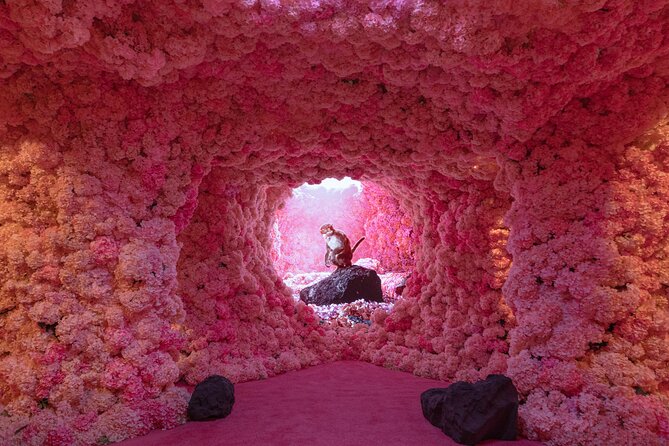
- Window portal into the infinite: a dramatic start before you hit the main projection rooms
- 16K Map Room laser visuals: high-detail laser projection that looks engineered for wow-factor
- 4D Sound with omni-directional audio: space-like sound holograms that track around you
- Dragon Room lighting scale: 507,000 LEDs paired with music for a huge, room-filling effect
- Ball Pond + LED chess play: slide, play, and interact with bigger-than-life tech installations
- Scan-to-3D Drawing Station: create an animal at the end and see it show up in a live 3D ecosystem
What You’re Actually Buying for $56.62
Mercer Labs is a ticketed, indoor tech art experience built around spectacle and interaction. You’re paying for a short sequence of themed rooms where the main attraction is what technology does to light, sound, and movement.
At $56.62 per person, the value comes from how much you lean into it. If you move quickly, skip the hands-on bits, and don’t pause for the sound and light design, it can feel pricey for the time. If you treat it like a “slow walkthrough” and actually play with the interactive stations, the ticket starts to make more sense. In my view, the museum shines when you give each room a full look instead of trying to speed-run the experience.
Also note what’s not included: there’s a Mochi Café and a store, but you pay separately for snacks.
You can also read our reviews of more tours and experiences in New York City



The Sensory Start: Window Portal and the Map Room
You begin with the Window, described as a portal to the infinite before you step into the larger projection space. It’s the kind of opening that helps you reset your brain from street noise to controlled light and sound, so the rest of the rooms land harder.
Then comes the Map Room with 16K laser projections. The appeal here isn’t just “pretty lights.” Laser mapping at that detail is meant to give you a sense of depth and motion, so you feel like the space is being drawn and redrawn around you. If you like visuals that look engineered rather than just recorded video, this is one of the early rooms to pay attention to.
A practical note: the museum’s design encourages you to keep moving along a set path. If you’re trying to “save the best for last,” you may need to decide fast where you’ll linger. The good news is that many rooms include spots to sit back and watch.
The 4D Sound Gallery: Why Omnidirectional Changes Everything
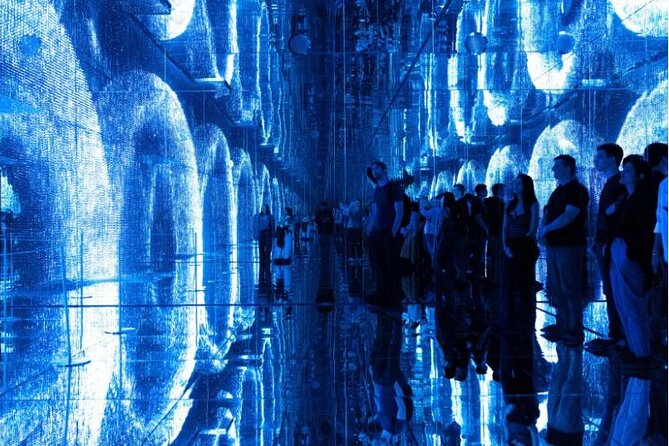
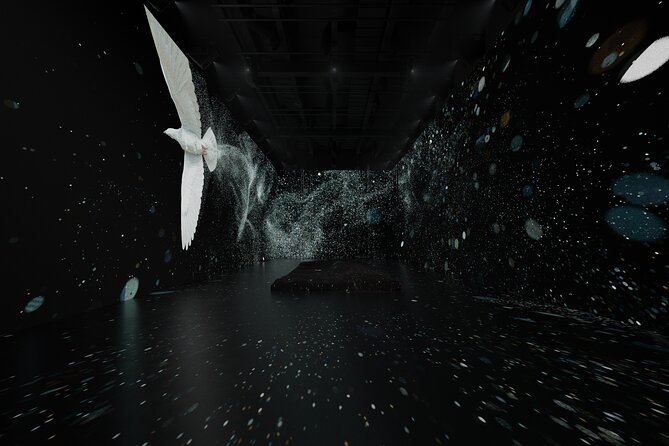
After the projection start, you hit the 4D Sound gallery with omni-directional audio. The big idea is that the sound doesn’t feel locked to one speaker direction. Instead, it creates vivid space-sound holograms with precision and clarity, so your brain reads the room as a three-dimensional audio environment.
This is the part that can surprise you even if you think you’ve seen “immersive sound” before. When audio is truly around you, it changes how you experience motion and visual effects. It’s not just volume—it’s placement.
Two tips if you want to get the most out of it:
- If you’re sensitive to loud sound, go in ready for that. The museum uses music and sound as a design element.
- Don’t fight the darkness. Let your eyes adjust; the sound and light cues work together.
Infinity Rooms and the Dragon Room With 507,000 LEDs
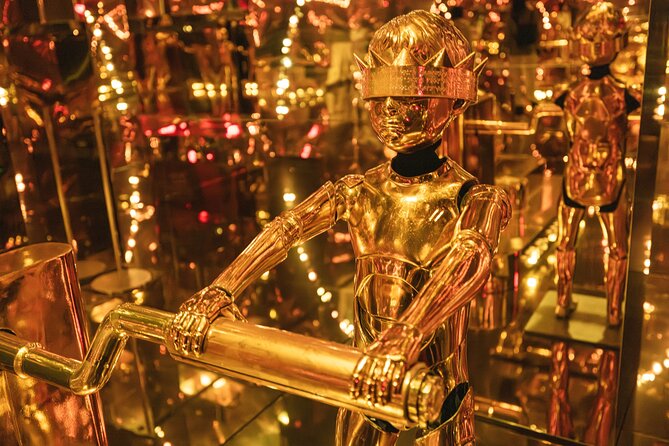
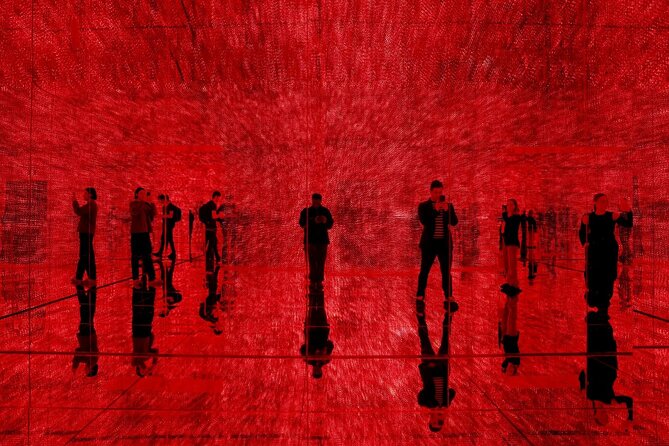
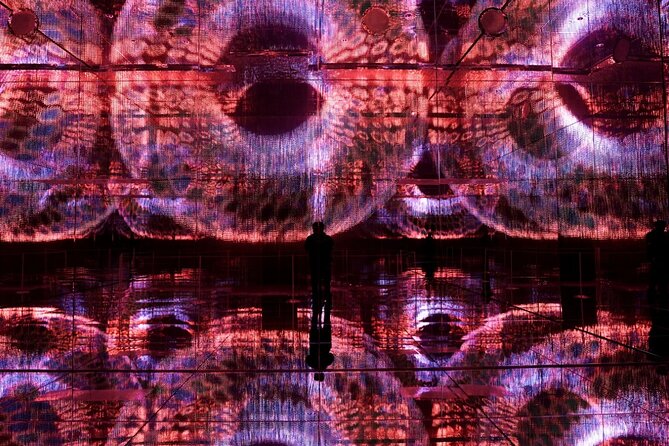
Now for the headliner: the Dragon Room, paired with stunning infinity-style rooms. You’re told it uses music and 507,000 LED lights, and it’s also described as the largest installation of its kind.
This is where the museum really earns the “art-and-technology lab” label. Large LED installations can feel gimmicky elsewhere, but here the lighting is part of a bigger composition, not just a single flash display. The scale matters because it fills your peripheral vision. You’re not just looking at a screen—you’re standing inside the effect.
The infinity-room concept also matters. Infinity rooms create that disappearing-depth feeling that’s hard to photograph well but easy to feel. If you enjoy optical illusions and room-scale design, you’ll get why people call it mind-blowing.
Downside consideration: if you dislike dark rooms or get uncomfortable in low-light environments, some parts of the show may be challenging. If you have vertigo or strong sensitivity to dark spaces, I’d treat this as a “go with caution” choice rather than a carefree outing.
Ball Pond, Chess Play, and Robotic Moments
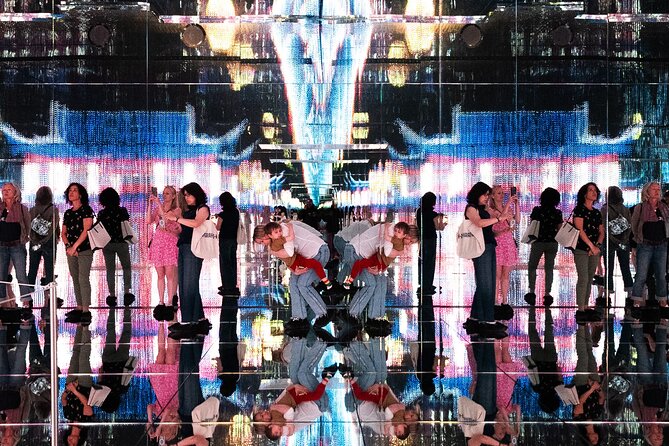
As you move deeper into the experience, you’ll find playful set pieces. One of the standouts is the Ball Pond, described as something you can slide into. It’s a classic “move, touch, laugh” moment, and it breaks up the more seated, show-focused areas.
Then there’s a larger-than-life chess setup, with movable sculptures and a robotic encounter. The chess is more than a theme. It’s designed to get you thinking in a physical way—changing positions, interacting with elements, and reacting to robotic presence.
If you like playful tech, you’ll likely also enjoy the robot interactions sprinkled through the museum. One review specifically calls out a robot violin you can play by waving your hand. That’s exactly the kind of “short, fun, instantly understandable” interaction that makes families happy and keeps adults from feeling like they’re only watching.
You can also read our reviews of more museum experiences in New York City




Roy Nachum’s Crown Kids and the Art Side of the Lab
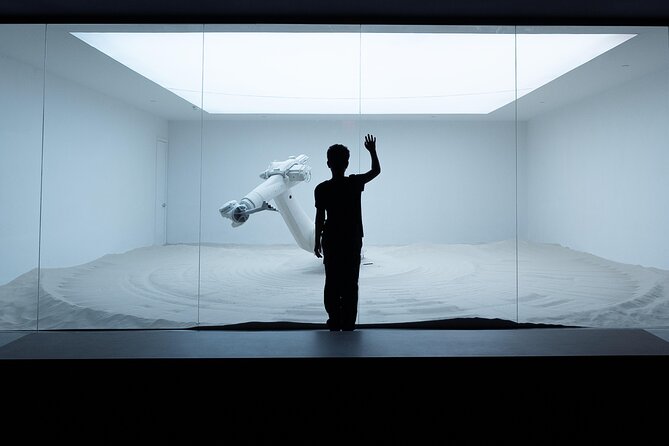
Mercer Labs doesn’t position itself purely as a tech ride. It includes an art layer too. The experience features Roy Nachum’s Crown Kids, noted as the designer behind Rihanna’s Antialbum cover.
Even if you’re mostly there for the light and sound, this kind of recognizable art connection adds a helpful angle: it signals that the installations aren’t only about spectacle. They’re also about image-making, visual style, and modern pop-culture art thinking.
The Drawing Station: Turn Your Animal Into 3D Video
The final level is built around creativity. At the interactive Drawing Station, you create a personalized animal and then scan it into a live 3D video ecosystem.
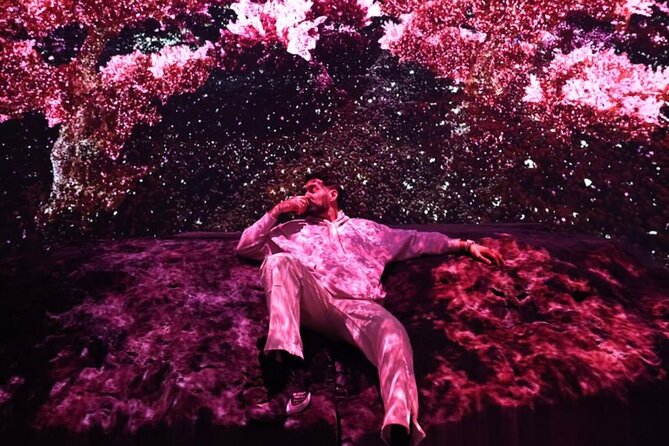
This is one of the best-value moments in the whole ticket because you leave with a sense of contribution. You’re not just reacting to the room—you’re feeding the system. And because it’s interactive at the end, it gives the experience a satisfying finish rather than fading out into a last light show.
If you’re traveling with kids, this is often the easiest moment to explain. If you’re an adult, it’s still fun if you like playful constraints—draw something, scan it, and watch the tech interpret your creation.
Timing, Getting There, and What to Wear in NYC
In a city like New York, the biggest practical question is whether your ticket fit your day. Mercer Labs is near public transportation, and it’s convenient for pairing with Hudson Yards shops and nearby sightseeing and arts stops.
Tickets are timed, and that matters. You’ll want to arrive with enough buffer to get settled before your slot starts. Once you’re inside, the flow is designed so you progress through levels in order.
Wear-wise, here’s the honest advice that comes straight from how the experience works:
- You’ll put on shoe covers.
- There are mirrored floors, so skip anything slippery or fussy. Comfortable bottoms beat fashion.
- Leave the fancy heels at home.
One more smart move: don’t rush. People do finish fast, but the best results come when you slow down and actually watch the sound and light cues. Also, it’s designed as a forward-moving flow, so once you move past a floor, you may not be able to bounce around like a normal museum.
Who This Experience Fits Best (and Who Might Struggle)
Mercer Labs is a strong pick if you want a tech-forward break from typical NYC sightseeing. It’s especially good for:
- Families looking for a rainy-day activity that keeps kids engaged
- Adults who love light-and-mirror installations and room-scale audio
- Groups who want something different from another “walk and look” museum
It may be less ideal if:
- You hate loud sound. The experience uses music and sound heavily, and some rooms can feel intense.
- You dislike dark environments. Some sections are dark, and the overall mood uses lighting design that isn’t bright and airy.
- You want a traditional museum with big explanatory placards and long galleries. This is interactive and show-based, with rooms that can feel small compared to what you might imagine from photos.
Should You Book Mercer Labs?
If you like hands-on tech art, you’ll probably enjoy Mercer Labs more than you expect. The combination of 4D Sound, the Dragon Room LED scale, and the scan-to-3D drawing finish gives you multiple ways to engage, not just one.
But if your main goal is a deep, leisurely museum visit, or if you’re deciding based on bargain hunting alone, think twice. The price is city-level and the time is short, so your best strategy is to book with intention: plan for an hour to an hour and a half, wear comfy shoes for mirrored floors, and don’t skip the interactive parts.
If that sounds like your kind of day, Mercer Labs is a smart, memorable NYC detour.
FAQ
How long does Mercer Labs take?
Expect about 1 hour to 1 hour 30 minutes for the experience.
What does the admission ticket include?
Your ticket includes entry to the Mercer Labs experience, major installations like the 16K laser Map Room, the 4D Sound gallery, the Dragon Room with 507,000 LED lights, and the interactive Drawing Station.
What costs extra at Mercer Labs?
The Mochi Café and store are not included in the admission ticket.
What’s the price per person?
Admission is listed at $56.62 per person.
Do I need a printed ticket?
No. The ticket is a mobile ticket.
Is the visit timed?
Yes, tickets are booked for a time slot.
Can I cancel and get a full refund?
Free cancellation is available if you cancel at least 24 hours before the experience start time. Canceling within 24 hours is not refundable.
Are service animals allowed?
Yes, service animals are allowed.
Is Mercer Labs near public transportation?
Yes, it’s near public transportation.
Is it interactive, or is it mostly watching?
It’s interactive. You’ll be able to use activities like the Drawing Station, and there are also tech play moments such as robotic interactions and the ball pond/chess-style area.