REVIEW · NEW YORK CITY
Midtown North NYC Architecture Walking Tour
Book on Viator →Operated by Build Tours · Bookable on Viator
Midtown North feels less random after this walk. In just about two hours, you move from Grand Central Terminal to brand-new towers and pick up the connections that shaped the skyline—without needing to be an architecture nerd first. The group stays small (up to 15), so questions don’t get lost in the crowd.
I love the way the tour uses personal headsets, which keeps the conversation clear on a noisy Midtown sidewalk. I also like the mix of big-name landmarks and newer buildings with known architects and dates, so the story runs from classic icons to 2020s development. One possible drawback: some of the building talk can get fairly technical, so if you only want casual photo stops, a few sections may feel more detailed than you expected.
In This Review
- Key Things That Make This Midtown North Architecture Tour Work
- First Stop: Starting at the Harvard Club, Then Pointing You Toward Midtown Clarity
- Grand Central Terminal: A Built-In Lesson in Why Midtown Got Its Pull
- Seagram Building: Learning to Spot Design Intent Fast
- JP Morgan Chase Office Tower (Between Vanderbilt and Park Avenue): Modern Development With Real Context
- Harvard Club of New York City: Turning a Landmark Meeting Place Into a Mini History Lesson
- Chrysler Building (William van Alen, 1930): One Famous Exterior, Lots to Learn From It
- St. Patrick’s Cathedral: When the Tour Shifts From Office Power to Public Spiritual Space
- Lever House (SOM, 1953): A Mid-Century Marker You Can Compare Immediately
- MetLife Building (Architects Collaborative, 1962): Scale and Corporate Identity on Display
- MoMA From the Outside: How Museums Still Shape the Street
- Rockefeller Center: Street-Level Icon Power and a Story You’ll Remember
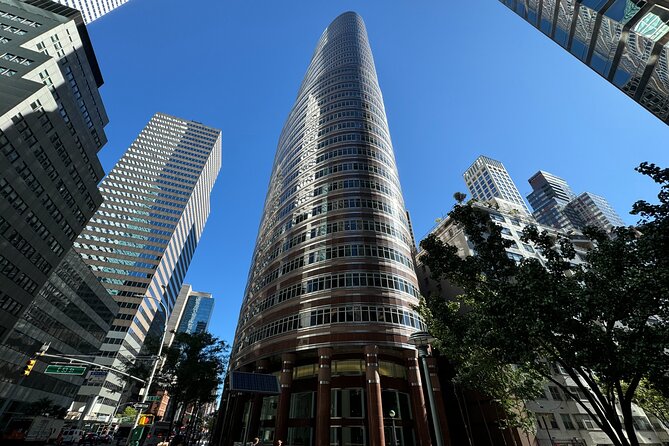
- Steinway Hall and Tower (ShoP Architects, 2022): Passing a Recent Statement in the Sky
- Central Park Tower (Adrian Smith + Gordon Gill Architecture, 2023): The Skyline’s Latest Page
- How Much You’ll Enjoy This Tour (Based on Your Travel Style)
- Price and Value: Is $59 Worth It for a 2-Hour Walk?
- Should You Book This Midtown North Architecture Tour?
- FAQ
- How long is the Midtown North Architecture Walking Tour?
- What does the tour cost?
- Where does the tour start and end?
- Is a mobile ticket used?
- Is the tour available in English?
- How large is the group?
- Are admission tickets included?
- Are headsets provided?
- Can I cancel and get a full refund?
- Is tipping included in the price?
Key Things That Make This Midtown North Architecture Tour Work
- Up to 15 people means you get real interaction, not a forced march
- Individual headsets help you hear your guide without crowding or repeating yourself
- A smart timeline arc from Grand Central through 2022–2023 towers
- You get guided access for certain stops, plus outside viewing where interiors aren’t the point
- The route ends near Apple Fifth Avenue, handy if you want to keep walking after
First Stop: Starting at the Harvard Club, Then Pointing You Toward Midtown Clarity
You meet at the Harvard Club of New York City, at 35 W 44th St. From there, you’ll be guided into the Midtown North corridor that most visitors see only as a blur of facades. The key is pacing. You’re not just sprinting between famous buildings; you’re stopping long enough for the guide to explain what you’re looking at and why it matters in the city’s growth.
What I like about this setup is that it makes the city easier to navigate mentally. Midtown has layers: older landmark energy, corporate power in mid-century designs, and then the newer skyline push in the last few years. Once you learn how to “read” those layers, everything you pass afterward starts making more sense.
Also, since this tour runs in English, you’ll get the story in a straightforward way. And the guide team listed by the operator includes English, Spanish, and Italian—so it’s built for multilingual visitors even if your tour is English-led.
You can also read our reviews of more walking tours in New York City



Grand Central Terminal: A Built-In Lesson in Why Midtown Got Its Pull
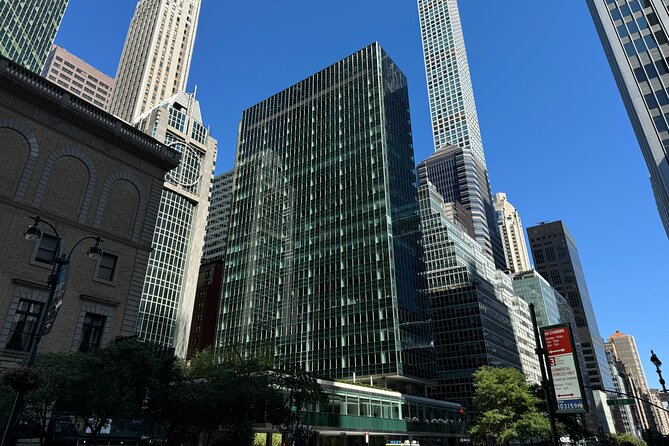
Your route begins with Grand Central Terminal. Even if you’ve walked past it before, your guide puts it into context so it doesn’t stay a postcard. Think of this as your anchor stop: it sets a reference point for scale, ambition, and what Midtown chooses to emphasize in public life.
You’ll spend about 10 minutes here, and the tour notes an admission ticket is free for you. Practically, that’s a big value boost because it reduces friction. Instead of hunting for your own entry plans, you show up and use the time well.
The main benefit at this stage is momentum. After Grand Central, you’re ready to compare the next buildings without your brain treating each stop as a random sight.
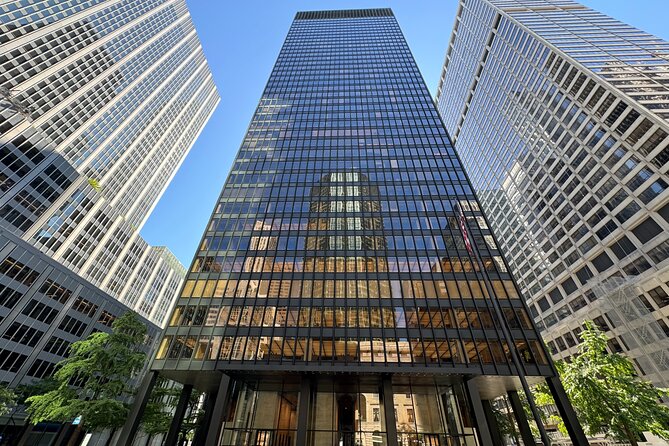
Seagram Building: Learning to Spot Design Intent Fast
Next up is the Seagram Building, where you visit and discuss it for about 10 minutes. This is one of those stops where the guide’s real job shows. Your eyes might register the exterior, but the guide turns it into a way of seeing—how form signals status, how corporate buildings communicate confidence, and how Midtown can feel both strict and stylish depending on the era.
This stop is also good for travelers who want to ask questions. With a max group size of 15 and headset audio, you’re not stuck waiting for a single person to ask something important.
If you care about design basics, pay attention to contrasts. You’ll soon move into other institutional buildings (and then newer towers), so try to clock how the Seagram Building’s approach differs from what comes next.
JP Morgan Chase Office Tower (Between Vanderbilt and Park Avenue): Modern Development With Real Context
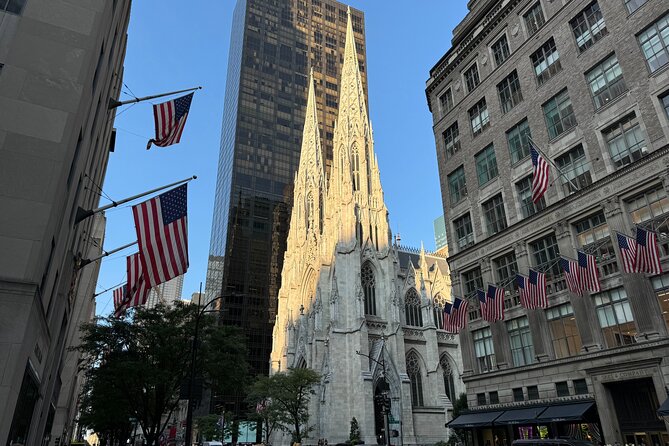
You move to the new office tower of JP Morgan Chase, between Vanderbilt and Park Avenue. This stop is shorter—about 5 minutes—but it’s still useful because it’s placed where it makes the timeline feel current rather than theoretical.
A quick stop can still work if the guide gives you a few “look-for” points. For instance: how the tower fits its Midtown neighbors, how it reflects the way major companies build in this part of Manhattan today, and how placement matters as much as height.
In practical terms, this stop helps you avoid a common mistake on architecture walks: treating newer buildings as just shiny and older buildings as just historic. Here, you’re encouraged to compare choices across time.
Harvard Club of New York City: Turning a Landmark Meeting Place Into a Mini History Lesson
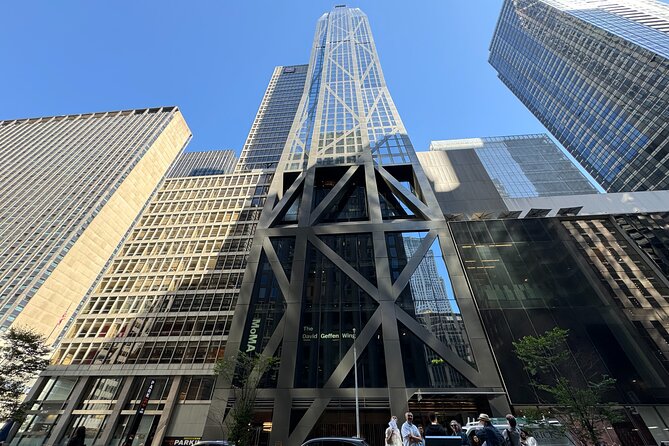
You’ll then visit the Harvard Club of New York City for about 10 minutes. This is also your meeting point earlier in the day, which makes it a smart rhythm choice: you see it once as a starting landmark, then again as a guided stop with actual explanation.
For architecture-minded visitors, this kind of repeat visit does something subtle. It forces your brain to update from first impressions to informed noticing. Instead of thinking, Oh, that’s where we started, you start noticing how the building contributes to the street scene and what the club setting communicates in a neighborhood filled with commerce.
If you’re traveling with family, this is also a good stop to manage energy. It’s long enough for interest, but not so long that it becomes a slog.






Chrysler Building (William van Alen, 1930): One Famous Exterior, Lots to Learn From It
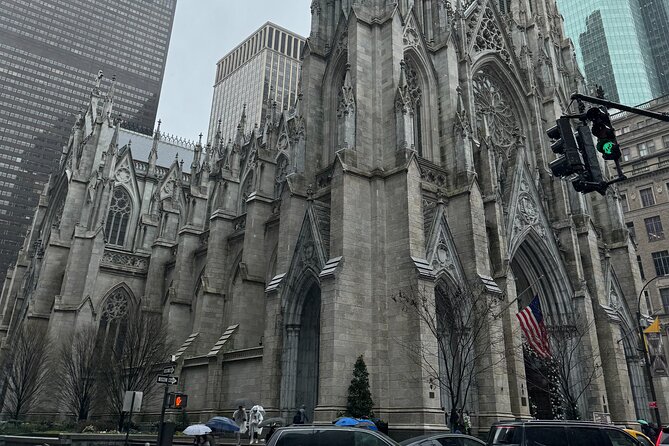
Next you’ll see the Chrysler Building by William van Alen from 1930. The stop is about 5 minutes, but that’s normal for Midtown walking tours—some landmarks are easiest as exterior focus points.
What makes it worthwhile is the guide’s framing. You’re not just spotting a name. You’re learning what a signature landmark is doing in the skyline picture: how a building announces itself, how it reads at street level, and how Midtown learned to treat architecture as a kind of identity.
If you’re the type who loves details, ask your guide what to look for on the structure before you move on. With personal headsets, you can keep your attention without losing the thread.
St. Patrick’s Cathedral: When the Tour Shifts From Office Power to Public Spiritual Space
Now the route turns to St. Patrick’s Cathedral, the New York Catholic Cathedral, with about 5 minutes here. This stop adds balance. Without it, the walk can tilt too heavily toward corporate and institutional design.
The practical value of including a major cathedral is that it changes your comparison set. You can look at how design affects crowd movement, how sacred space holds attention, and how Midtown isn’t only about finance. It’s also about long-standing community anchors.
Short stops like this still work when you use them well: pick one or two elements your guide points out and really watch them from multiple angles as you walk around.
Lever House (SOM, 1953): A Mid-Century Marker You Can Compare Immediately
Lever House, by SOM from 1953, gets about 5 minutes. This is another timed stop, but it’s especially helpful because it creates a mid-century checkpoint. With other stops clustered across different eras, your brain starts building a pattern: how Midtown’s priorities changed across decades.
This stop is a great fit for travelers who want a “timeline feeling” without reading a guidebook on the subway. You can physically compare eras right on the street.
If you’re traveling with someone who only half-cares about architecture, this is the kind of stop that often clicks. It’s visually distinct, and your guide can keep the explanation grounded in what you see rather than academic jargon.
MetLife Building (Architects Collaborative, 1962): Scale and Corporate Identity on Display
The MetLife Building, by the Architects Collaborative from 1962, is another about 5 minutes stop. This is where Midtown’s corporate era becomes harder to ignore. The building is part of the skyline’s language: clean lines, strong presence, and a sense that design isn’t just decoration—it’s messaging.
The best way to enjoy this moment is to slow down just a little. Your guide will likely point out what makes this building feel of its time, and you can compare it mentally to Lever House just before and what you’ll see later with newer towers.
If you like architecture because it tells a story, this is a good chapter in that story.
MoMA From the Outside: How Museums Still Shape the Street
You’ll then see and discuss the Museum of Modern Art (MoMA) from the outside for about 10 minutes. That’s important: it sets expectations that not every stop is about entering a building.
But outside-focused stops can still teach a lot. Museums influence a neighborhood’s feel, even when you’re not inside. Your guide’s job here is to connect the institution to the broader urban fabric: why it sits where it does, how it contributes to the Midtown identity, and how modern culture fits into an area often dominated by offices.
I like this stop because it shifts the walk from purely architecture-as-industry into architecture-as-public culture. It also gives your legs a brief reset after a cluster of office-focused buildings.
Rockefeller Center: Street-Level Icon Power and a Story You’ll Remember
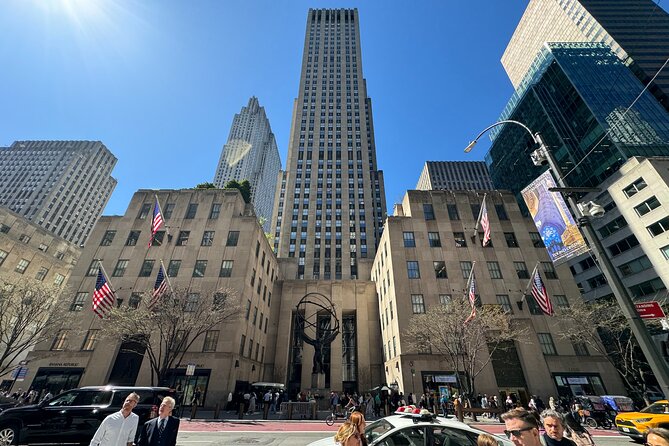
Rockefeller Center gets about 10 minutes. It’s one of those places where even a short pause feels worthwhile because there’s so much to see at once.
Your guide will help you make sense of it, not just look at it. And it’s also a stop where you can get the kind of fun, specific question that turns architecture into a human story. One guide-led moment highlighted the Atlas statue and why its face can feel so stern—exactly the type of detail that sticks with you after the tour ends.
If your camera roll is full but your understanding is light, this stop is your fix. Treat this as the moment where you learn how Midtown’s famous spaces create emotional impact, not only skyline lines.
Steinway Hall and Tower (ShoP Architects, 2022): Passing a Recent Statement in the Sky
You’ll pass by Steinway Hall and Tower by ShoP Architects from 2022. This is listed as a pass-by rather than a long visit, so it’s about speed and observation. The value here is that it bridges the walk to the newest skyline thinking.
Even a brief look can help you understand the “now” side of Midtown architecture. Instead of treating new buildings as separate from classic landmarks, you get to compare their design language and their role in shaping what comes next.
If you want to squeeze the most from this pass-by, look at how the building’s presence affects the street scene around it. Your guide’s comments here make that connection clearer.
Central Park Tower (Adrian Smith + Gordon Gill Architecture, 2023): The Skyline’s Latest Page
The final stop is Central Park Tower by Adrian Smith + Gordon Gill Architecture from 2023, about 5 minutes. Ending with a 2023 project is a clever choice. You finish the walk with a sense of momentum, not nostalgia.
This last look does two jobs:
1) It shows how fast Midtown’s building culture keeps evolving.
2) It gives you a concrete anchor for what “modern” means in this exact stretch of Manhattan.
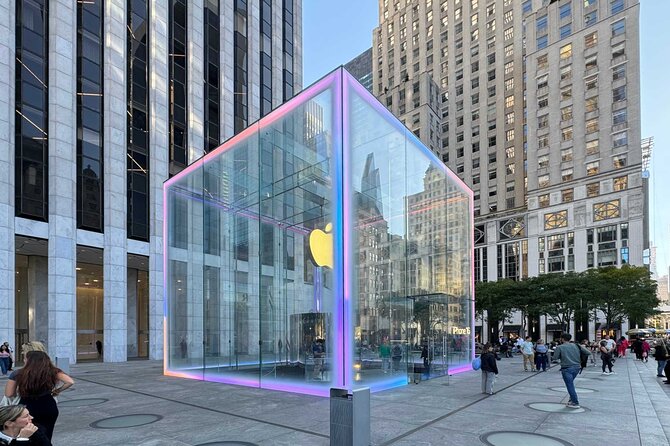
When the tour ends, you finish at Apple Fifth Avenue, at 767 5th Ave. That matters more than it sounds. Ending near a major destination makes it easy to continue your day—either for food, shopping, or simply more walking along Fifth Avenue with your eyes now turned into a better detector system.
How Much You’ll Enjoy This Tour (Based on Your Travel Style)
This tour is best if you like architecture but also want guidance that keeps it readable. A max of 15 people helps, and the headset system keeps the experience from turning into a shouting match.
You’ll probably be happiest here if:
- You want a guided route that covers major landmarks without you researching each stop
- You enjoy asking questions and getting specific answers
- You like the idea of comparing eras side by side, from landmark icons to the latest towers
You might want to adjust expectations if:
- You’re mainly after a fast photo circuit rather than building-by-building context
- You prefer very light explanations; parts of the talk can get technical
Price and Value: Is $59 Worth It for a 2-Hour Walk?
At $59 per person for about 2 hours, the value comes from what’s included and how it’s delivered. You’re paying for a guided route that links a dense set of Midtown icons, plus headset gear so you don’t lose details in sidewalk noise.
You also get all fees and taxes included, and the tour lists free admission tickets for at least one major stop (Grand Central Terminal). On top of that, the small group size matters. It’s not just comfort; it’s how you actually get answers instead of standing at the edge.
And compared to spending your own time bouncing between sites independently, this tour trades a bit of control for structure. For many first-timers to Midtown North, that trade is the whole point. You leave with a clearer mental map.
Should You Book This Midtown North Architecture Tour?
Book it if you want a practical way to understand Midtown through architecture, not just through landmarks. The small group cap, headset audio, and the route’s era-by-era mix make it feel efficient and engaging.
Skip it (or at least consider a different format) if you prefer purely casual stops with minimal talking. This is a guide-led experience, and the guide will talk—sometimes with detail.
FAQ
How long is the Midtown North Architecture Walking Tour?
It runs about 2 hours (including travel time).
What does the tour cost?
The price is $59.00 per person.
Where does the tour start and end?
The meeting point is the Harvard Club of New York City, 35 W 44th St. The tour ends at Apple Fifth Avenue, 767 5th Ave.
Is a mobile ticket used?
Yes, the tour uses a mobile ticket.
Is the tour available in English?
Yes, the tour is offered in English.
How large is the group?
The maximum group size is 15 travelers.
Are admission tickets included?
All fees and taxes are included, and the tour notes admission ticket free for the stops listed on the route.
Are headsets provided?
Yes. The tour includes professional individual headsets for each guest.
Can I cancel and get a full refund?
You can cancel up to 24 hours in advance for a full refund. If you cancel less than 24 hours before the start time, the amount paid is not refunded.
Is tipping included in the price?
Tips are not included.