REVIEW · NEW YORK CITY
NYC: Little Italy Mafia History Walking Tour
Book on GetYourGuide →Operated by Tourizee · Bookable on GetYourGuide
Mafia history hits different when it’s on your route. This Little Italy walk connects the rise of the mob to real street corners, from black-hand gangs to prohibition liquor wars. I especially like the way the tour uses specific landmarks instead of just reciting famous names, and the guide’s photo-assisted storytelling that helps you picture what these buildings looked like back then. One heads-up: this is a crime-forward tour, so if you want light and fluffy sightseeing, it may feel a bit heavy.
What really makes this one work is the human scale. The guide—often praised for being fun and well prepared, with examples like Tom, Tim, and Paulie—keeps the pace moving and the facts clear, without turning it into a lecture. I also like that the stops go beyond the big gangsters to include law enforcement and corruption, so the story has more than one side.
The main consideration is simple: it’s a walking tour and it’s not set up for mobility impairments. Bring comfortable shoes, expect an active 2-hour outing, and keep your expectations aligned with dark, violent history.
In This Review
- Key points before you go
- Entering Little Italy’s mob era from 44 Spring St
- The story begins with black-hand gangs and the liquor war
- Little Italy stops where names like Gotti belong
- Ravenite Social Club: where the mob mythology gets real
- Lt. Petrosino Square and the police fight against the syndicates
- Umberto’s Clam House stop: NYC flavor with a crime shadow
- The Gotti arc and Lucky Luciano’s system shift
- End with the spots tied to Sally Bugs Briguglio and Crazy Joey Gallo
- Optional add-ons: Godfather locations and a path toward Five Points
- What I’d watch for on the ground
- Value: is $30 worth it?
- Should you book the NYC Little Italy Mafia History Walking Tour?
Key points before you go
- Start at 44 Spring St at the DaSalvio Playground corner—easy to find, and the tour starts promptly.
- Short, focused guided stops add up to a tight route instead of a long slog.
- Ravenite Social Club is a centerpiece stop for the mob vibe.
- Police-fight stops (including Lt. Petrosino Square and the Police Building) balance the gangster lore.
- Godfather and Five Points are optional if you want extra movie-and-New York context.
- Guides use visuals, with some guides carrying binders of historical photos to match what you’re seeing.
Entering Little Italy’s mob era from 44 Spring St
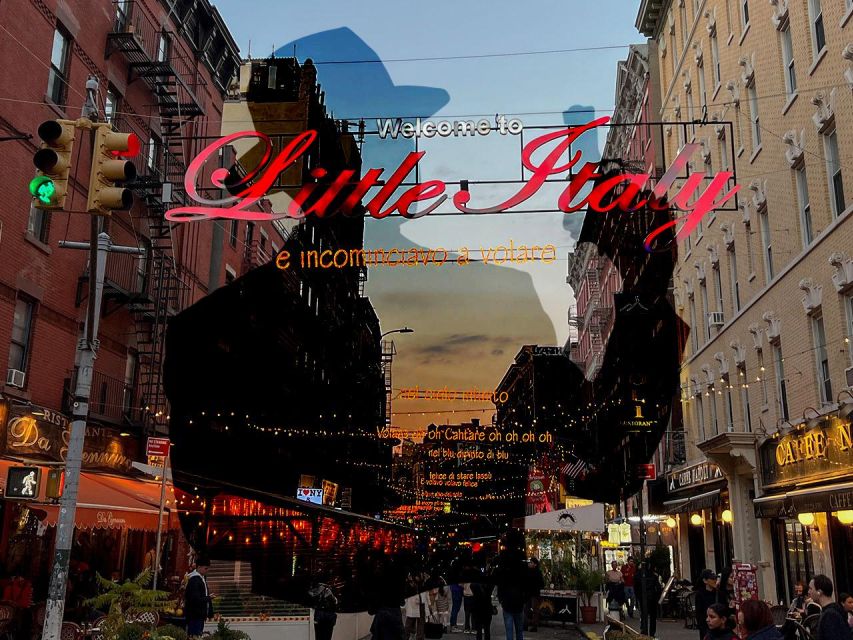
The tour begins at 44 Spring St on the corner of Mulberry, right next to the DaSalvio Playground. Plan to show up about 10 minutes early and look for the guide in a white cap. That little detail matters because the route is designed to run on time, and there’s no waiting around for late arrivals.
From the first block, you’re meant to connect history to geography. Instead of treating the mob like a movie plot, you’re walking through the neighborhoods where different players fought for control—especially around gambling, labor, and the liquor trade. Even if you know a few big names already, I like how the tour makes you understand what led to them, not just who they were.
Expect a steady walking pace and lots of stops where the guide gives context. You’ll be on your feet long enough that comfortable shoes are a real requirement, not a suggestion.
You can also read our reviews of more walking tours in New York City



The story begins with black-hand gangs and the liquor war
The tour’s opening theme is early street-level organized crime: black-hand gangs and the brutal tactics used to control territory. You then move into the prohibition era, when liquor trafficking turned into a major business and a major battleground. In plain terms, this is where the mob shifts from scattered violence to something closer to an organized system.
This part matters because it explains the “why” behind the famous “who.” When you learn how the liquor trade reshaped power, it becomes easier to follow later turns like Joe Masseria’s rise as the tour frames it. You’re not just collecting names—you’re tracking a business model that keeps evolving.
If you’re a fan of mafia TV and movies, this is the section where you’ll recognize patterns: control the supply, control the neighborhood, enforce the rules. It’s the same logic you see in fiction, but grounded in real New York streets.
Little Italy stops where names like Gotti belong
As you move through Little Italy, the tour zeroes in on specific, notorious figures. John Gotti’s presence is part of the route—this includes a stop tied to where he held court. The guide’s approach here is to connect the reputation to the location, so you’re not stuck imagining it from a distance.
Then comes the darker centerpiece: where Crazy Joey Gallo was gunned down. This is the kind of moment that turns gangster history from “interesting” into “why was everyone so ruthless?” You’ll hear the motivations and the fallout, not just the headline.
I appreciate that the tour doesn’t treat these events as isolated shocks. Instead, it keeps circling back to the idea that organized crime is systems and rivalries, not just one villain. You start seeing how power shifts, alliances form, and violence becomes a tool for negotiation.
Ravenite Social Club: where the mob mythology gets real
One of the biggest highlights is the Ravenite Social Club stop. It’s built into the schedule as a guided visit, and it’s the place where the tour’s tone clicks into full mob-era mode. This isn’t about romanticizing; it’s about showing how these groups operated socially and strategically.
You’ll spend about 15 minutes here with the guide. The value is in the framing—why this kind of location mattered, how it fit into the network of protection and influence, and how it connects to the later rise-and-fall stories that follow.
If you’ve ever watched mob dramas and wondered why certain scenes feel so specific, this is the kind of stop that answers that instinct. The guide helps you see the club not as a set piece, but as a real node in the city’s power web.
Lt. Petrosino Square and the police fight against the syndicates
After the gangster side, the tour makes a smart pivot: you get law enforcement and early crime fighting. Lieutenant Petrosino Square is one of the stops, and it’s here that the tour broadens beyond the mob’s internal drama.
You’ll also visit the Police Building. This is part of the tour’s pattern: it doesn’t just show how criminals rose; it also explains how policing tried to respond—and where it struggled. The tour specifically calls out themes like exposing police corruption through the story of Frank Serpico.
I like this balance because it keeps the tour from becoming a single-note gangster tribute. You end up with a more complete view of how organized crime and the system meant to stop it played off each other.
You can also read our reviews of more historical tours in New York City






Umberto’s Clam House stop: NYC flavor with a crime shadow
The route includes a stop near Umberto’s Clam House, with a short guided segment. Even if you’re not planning to eat during the tour, this stop is useful because it connects the old neighborhood identity to today’s tourist-friendly Little Italy.
The practical value is simple: it gives you a natural place to orient yourself and plan food after. A lot of people schedule this tour and then turn around for classic Italian meal plans nearby. So even though the tour content is dark, the neighborhood is still very much alive around you.
Just remember: the tour portion is relatively short at this stop. It’s more about the story and the location than a full restaurant visit.
The Gotti arc and Lucky Luciano’s system shift
Two major story threads run through the tour’s latter stretch. One is the Dapper Don era, focusing on John Gotti’s rise and eventual fall. The other is Lucky Luciano’s “system change” approach—especially through the Commission of five families, described in the tour as Luciano’s way of reorganizing organized crime.
You’ll also hear about Luciano’s unlikely deal with the government during World War II. That’s a key detail because it shows how organized crime sometimes bargains with power rather than only fighting it. In your head, it helps connect the mob to broader politics and national events, instead of treating it like a closed street-level universe.
Then the tour ties it back to the big evolution story: early blank-hand gangs evolving into modern crime syndicates. In other words, the tour isn’t just saying “the mob exists.” It’s tracing how it became an institution.
End with the spots tied to Sally Bugs Briguglio and Crazy Joey Gallo
The tour ends by revisiting locations tied to bloody demises, including Sally Bugs Briguglio and Crazy Joey Gallo. This is where the tone stays serious. You’re not only learning about major players; you’re closing the loop on the violence that defined the era.
You’ll return to the starting point at 44 Spring St to finish. Plan for a solid post-walk cooldown afterward. If you’re combining this with other Lower Manhattan stops, I’d give yourself a bit of buffer—walking tours with heavy themes can feel longer than their official time.
Optional add-ons: Godfather locations and a path toward Five Points
There’s an optional extension depending on what you want that day. The tour may include movie-related locations from The Godfather and can continue on toward Five Points, the notorious 19th-century neighborhood made famous by Gangs of New York.
This is the part that can appeal to film fans who also want real-world context. It’s not just about recognizing sets; it’s about seeing how New York’s older neighborhoods were organized and why certain areas became symbolic in American storytelling.
If you already plan to spend time around Five Points afterward, asking the guide about how the optional route fits your schedule can help you get the most out of the day.
What I’d watch for on the ground
A few practical notes based on how this tour is set up:
- Dress for walking. Comfortable shoes are explicitly recommended, and the route is active.
- Expect English-only guidance. The tour is live-guided in English.
- Skip it if mobility is an issue. It’s not suitable for people with mobility impairments.
- Bring your curiosity about organized crime and policing. The tour covers liquor trafficking during prohibition, gangster rivalries, and police efforts including Lt. Petrosino and Frank Serpico themes.
- Have realistic expectations about time. The duration is listed as about 2 hours, and there’s also a 90-minute walking portion noted—so double-check your specific start time and plan around that total window.
Also, guides matter here. Some of the strongest feedback points to hosts like Tom using humor and clear structure, Tim being flexible with rescheduling when weather gets nasty, and Paulie bringing a lively city-first enthusiasm. If your schedule allows, you may want to pick a time slot that matches your energy level—this is a story tour, not a casual stroll with minimal talk.
Value: is $30 worth it?
At $30 per person, this is priced like an accessible, city-focused specialty tour. The value comes from the density: you’re not paying just for narration. You’re paying for multiple guided stops tied to major gangland threads—Ravenite Social Club, Lt. Petrosino Square, the Police Building, and the Umberto’s Clam House area—plus the connective tissue between early gangs, prohibition liquor trafficking, Lucky Luciano’s organizational changes, and the later Gotti era.
One detail that can affect cost: the price per person can be lower when more guests are booked. So if you’re traveling with friends or family, coordinating your booking can make the math even friendlier.
Is it worth it? If you like understanding how a system forms and how it eventually gets challenged (by rivals and by police work), yes. If you’re hoping for mainly food tasting, it’s not that type of tour. You’ll get location-focused story time, then you can eat.
Should you book the NYC Little Italy Mafia History Walking Tour?
Book it if you want a guided walk that connects mafia lore to real addresses—especially if you care about the shift from early gang violence to organized syndicates, and you like the added balance of police crime-fighting stories.
Skip it if you need a light itinerary or you’re not comfortable with violence-heavy storytelling. And if walking is difficult for you, look for another format that fits your mobility needs.
If you’re torn, here’s my simple rule: if you enjoy pairing a neighborhood walk with a strong narrative and you’ll actually pay attention to the names and timelines as you go, this is a smart use of a couple hours in NYC.