REVIEW · NEW YORK CITY
Taste of Chinatown, Little Italy New York Culture and Food Tour
Book on Viator →Operated by Jupiter Legend Corporation · Bookable on Viator
Hungry yet curious? This walk feeds both. I like the variety of tastings packed into about three hours, from hot tea and egg tarts to cannoli and pizza, and I like the small-group setup (max 12) that keeps the guide’s attention focused. One drawback to plan around: the route is fast-paced, and the operator can’t accommodate gluten-free or vegetarian diets.
You also get food plus drinks, not just “here’s a sample, good luck.” I like that the tour includes one bubble tea or fruit tea, and it keeps water in the mix so you’re not stuck fighting thirst between stops.
This is a walking tour with indoor and outdoor bits. If you want a relaxed, sit-down meal, you’ll probably feel rushed. If you want a compact flavor tour with history check-ins, you’ll likely have a great time.
In This Review
- Key highlights to know before you go
- Chinatown to Little Italy in about three hours
- What $89 covers (and what that means for value)
- Starting in Chinatown: Sweets Bakery and the egg-tart warm-up
- Photo stops at Nom Wah Tea Parlor and the Lin Zexu moment
- Confucius statue and street history on Doyers Street
- Vanessa’s Dumpling House: fried dumplings as the first real hit
- Mott Street Eatery: BBQ pork or roast duck plus dim sum
- Tiger Sugar: black sugar boba and the tiger-stripe look
- Kam Hing Coffee House: pandan sponge cake for the sweet reset
- Di Palo’s Fine Foods: Italian cheese plus olives
- Baby John’s Pizzeria and the mini cannoli finish
- How pacing and group size affect your experience
- Weather, shoes, and the reality of street-level New York
- Who this tour is best for (and who should skip it)
- Tour guide experience: what you can hope for
- Should you book Taste of Chinatown, Little Italy New York Culture and Food Tour?
Key highlights to know before you go
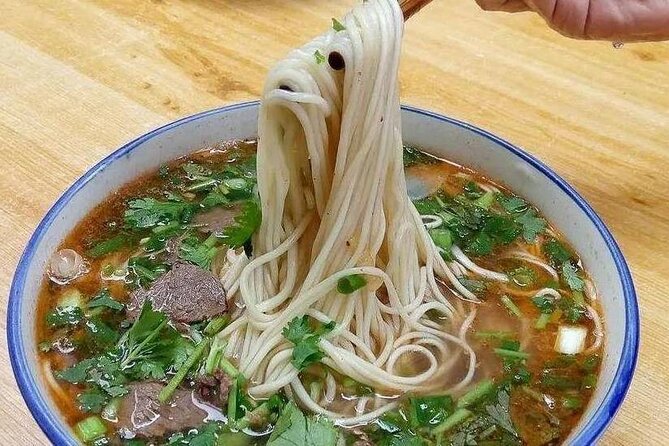
- A tight menu with real variety: Chinese dumplings and roast meats, Taiwanese-style black sugar boba, and classic Italian cheese, pizza, and cannoli
- Stops you’d miss on your own: small counters and older local institutions mixed into the route
- Three-hour pacing (so come hungry): you’ll sample over eight tasting courses, plus drinks, without time to wander off-script
- Photo-friendly cultural pauses: iconic Chinatown landmarks like Nom Wah Tea Parlor and statues such as Lin Zexu and Confucius
- Max 12 people: less crowding, easier questions, and smoother transitions at crowded storefronts
Chinatown to Little Italy in about three hours
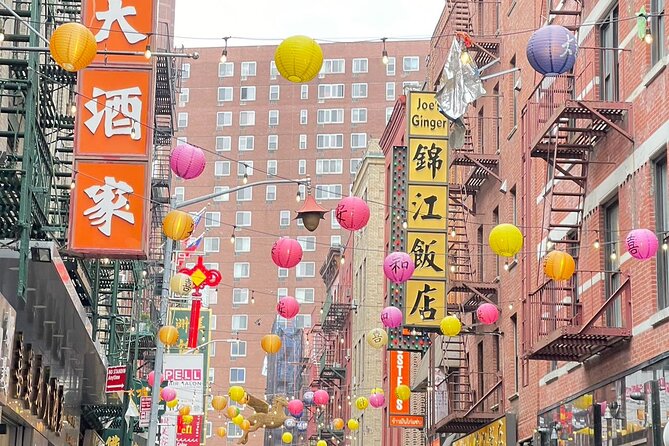
This tour is basically a guided “what to eat here” answer key. You’ll start in Chinatown and end in Little Italy, with a string of stops that go beyond the obvious tourist trail. The pacing is the big trade-off: it moves, but it also means you sample a lot without spending most of the day in line.
The best part is the mix. You’re not just doing Chinese food and then Italian food as two separate halves. You get sweet, savory, hot tea, boba, coffee-house cake, deli cheese, pizza, and a mini dessert to close the loop. In other words: your appetite doesn’t have to guess what’s next.
The walking is real. You’ll be standing, stepping between blocks, and moving in and out of storefronts. If your idea of travel is “long lunch + lingering,” this one may feel like homework. If your idea is “fill my trip with good bites,” it fits.
You can also read our reviews of more food & drink experiences in New York City


What $89 covers (and what that means for value)
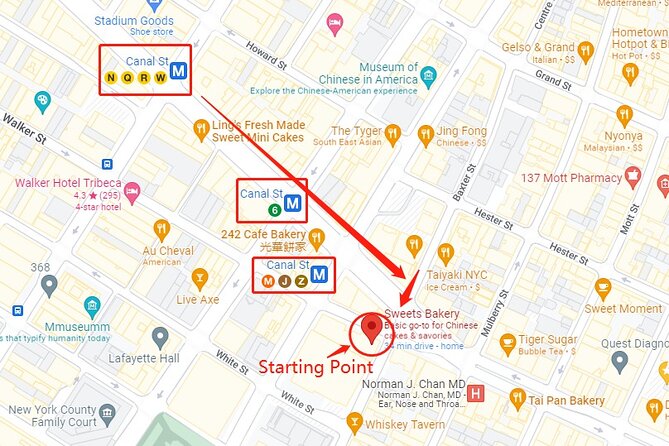
At $89 per person, you’re paying for more than the food. You’re covering admission for the pre-selected tasting items, plus drinks and bottled water. The tour also includes an expert English-speaking guide.
Here’s why that matters for value:
- You get over eight tasting courses, so the cost isn’t just paying for two snacks.
- You don’t have to order everything yourself. Many of the stops are set up for groups, so you’re not chasing menus when you’re hungry.
- You get a built-in “drink plan.” One soda/pop and one bubble tea or fruit tea per guest means you’re less likely to spend extra money to keep your energy up.
Plan for gratuity. It’s recommended around 15%–20%, even though the listed food and drinks are included. If you skip that, it can feel abrupt at the end when everyone is thinking about the bill.
Starting in Chinatown: Sweets Bakery and the egg-tart warm-up
You begin with something comforting and very Chinatown: hot tea plus a flaky egg tart at Sweets Bakery. It’s a smart start because it sets the rhythm. Hot, sweet, buttery—then you’re ready to roll into savory.
This is also a practical time to settle your bearings. You’ll likely be tempted to wander off visually the moment you step out onto the streets. The tea-and-tart stop gives you a buffer before the tour starts moving faster.
One small consideration: egg tart is sweet and rich. If you’re the type who gets overwhelmed by sugar early, take smaller bites and save some space for the fried and roasted items later.
Photo stops at Nom Wah Tea Parlor and the Lin Zexu moment
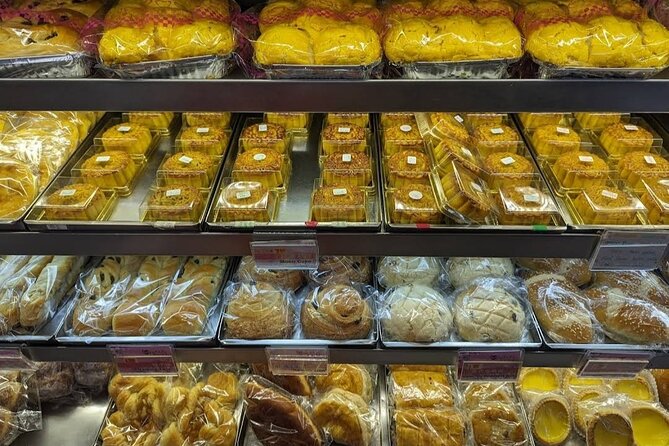
Next, you get a classic Chinatown landmark visit at Nom Wah Tea Parlor. The stop is short and photo-friendly—think quick look, quick pictures, then back out onto the streets.
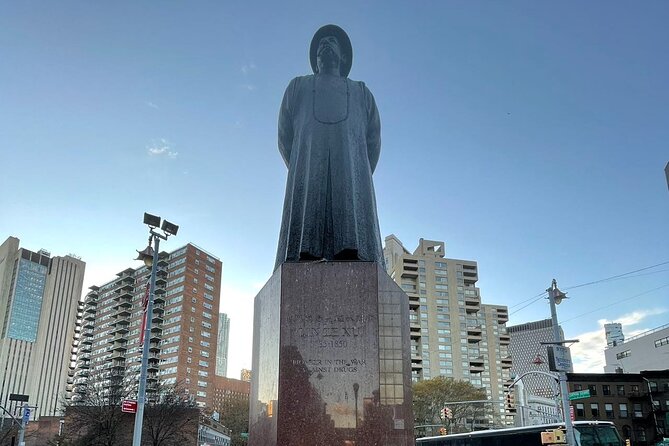
Then you visit the Lin Zexu monument. This one’s a reminder that Chinatown isn’t just about food. It’s also layered with symbols and stories tied to how communities lived, remembered, and represented themselves.
Even if you’re not the museum type, these quick pauses help you connect the taste to a place. Food tours work best when you can link a dish to a neighborhood, not just a menu.
Confucius statue and street history on Doyers Street
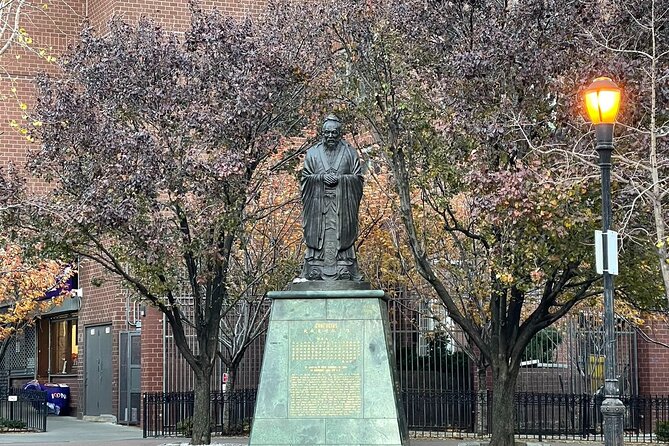
As you walk through Chinatown, you’ll also come across a Confucius statue near the intersection where donor details and background are written on the base. It’s one of those things you might never notice if you were just hunting for dumplings.
You’ll also pass by streets with a past that’s worth knowing—like Doyers Street, known for its historical reputation. You don’t need a lecture to get value from this. The point is simple: when you understand why an area looks and feels the way it does, you taste more on the food side too.
If you like culture facts that are short enough to stick, this part hits that sweet spot.
You can also read our reviews of more tours and experiences in New York City
Vanessa’s Dumpling House: fried dumplings as the first real hit
After the cultural checkpoints, the tour turns fully food-forward at Vanessa’s Dumpling House. Here the focus is on crispy, pan-fried dumplings—a street-food style classic.
This stop often feels like a turning point because it’s the first bite that’s both textured and savory in a serious way. Dumplings give you that immediate reward: crunchy exterior, juicy interior, and that satisfying “okay, I’m in the right place” feeling.
If you’re a dumpling person, you’ll probably want to pace yourself with bites. It’s easy to finish your sample too fast, especially when the next stop is BBQ and duck.
Mott Street Eatery: BBQ pork or roast duck plus dim sum
At Mott Street Eatery, you’ll sample BBQ pork or roast duck paired with dim sum. This is one of the stops that makes the whole tour feel more complete, because it adds roasted meats and the wider dim sum style—more than just one dumpling moment.
A practical heads-up: dim sum portions on tours can be limited compared to what you’d order if you were dining normally. If you love dim sum and want full variety, this tour may feel like a taste sampler rather than a full meal.
Still, it’s a good place to learn what flavors work together—savory meat, small dim sum bites, and the rhythm of eating multiple things in one sitting.
Tiger Sugar: black sugar boba and the tiger-stripe look
Next comes something you’ll likely remember just from the look: Tiger Sugar. You’ll try bubble tea or fruit tea featuring black sugar syrup. The signature detail is the tiger stripe design made with that syrup.
This stop is only about 10 minutes, but it plays a key role. After savory food, boba gives you sweetness and a different texture. It’s also a nice break from the heat and walking, depending on the weather.
If you dislike sweet drinks, you can still enjoy it by treating it as a sip-and-sample moment rather than a full drink commitment.
Kam Hing Coffee House: pandan sponge cake for the sweet reset
Kam Hing Coffee Shop is your stop for pandan sponge cake. Pandan is one of those flavors that can be hard to describe until you taste it—light, fragrant, and different from standard vanilla-style sweetness.
This is another practical choice after boba: you get cake that’s not identical to the egg tart sweetness you started with. If the tour feels like “sugar stacking” for you, this is one of the reasons you can still end up happy rather than stuffed.
The main consideration is timing. You’ll be eating sweets back-to-back. If you have a sensitive stomach, take it slow and sip water.
Di Palo’s Fine Foods: Italian cheese plus olives
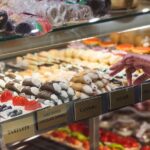
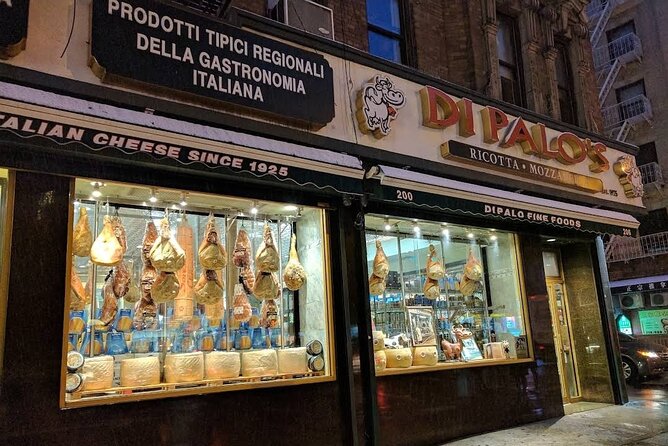
Then you cross over into Italian deli territory at Di Palo’s Fine Foods. You’ll sample a cheese plate accompanied by olives.
This stop does something important: it brings salt and fat in a more European style. Cheese and olives also act like a palate reset before pizza. It’s not just a filler stop; it changes the flavor profile so the Italian portion at the end feels like a true shift.
If you’re someone who loves tasting different cheese textures, this part can be a highlight even if you’re not a huge deli-person.
Baby John’s Pizzeria and the mini cannoli finish
At Baby John’s Pizzeria, you’ll get an authentic slice of Italian pizza. The stop is long enough to feel like you’re actually eating pizza, not just holding a paper plate.
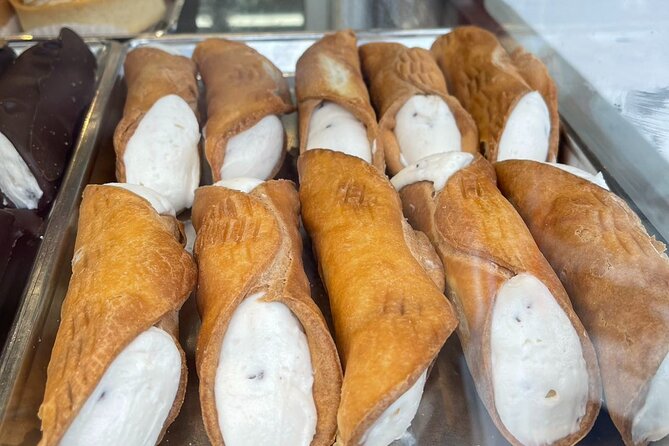
Finally, you wrap up with a mini cannoli at Cannoli King. It’s a classic ending move: creamy filling, crisp shell, and just enough dessert to make the whole walk feel satisfying without being a full sugar bomb.
If you’re the kind of person who hates ending tours with food because you’d rather go for a real dinner later, you might want to plan your next meal lightly. This tour is designed so you leave feeling fed, not starving.
How pacing and group size affect your experience
With a max of 12 participants, you usually get better flow at each stop. Lines at these kinds of places can be short but tight, and a small group helps keep the guide from scrambling. It also makes Q&A easier—especially when you’re trying to figure out what something actually is and how to order it later.
The tour is still fast. You’ll notice it most at the short cultural/photo stops. If you want extra time in a museum sense, you won’t get that here. But if you want “see, taste, learn the essentials, move on,” the pace works.
One more pacing tip: don’t eat a heavy breakfast before you go. Several people call out that the food volume is real. A simple breakfast is fine, but come with an empty stomach mindset and you’ll enjoy the whole route more.
Weather, shoes, and the reality of street-level New York
This is both indoor and outdoor. You’ll walk between storefronts and monuments, and comfort matters. Wear shoes that you can stand in for a while. If it’s raining, expect slick sidewalks and more cautious steps.
Dress for the weather you’ll actually have, not the weather you wish you had. When you’re in and out of shops quickly, you can’t always count on getting comfortable between stops.
If you’re traveling with kids, it’s generally family-friendly. Children under 4 can join for free, but they won’t receive separate tastings unless they have a ticket.
Who this tour is best for (and who should skip it)
This tour is a strong choice if you want:
- A high-sampling day in a small area
- Food variety across Chinatown and Little Italy
- A guided explanation that stays practical while you eat
- A manageable length—about three hours—so you still have energy for the rest of your trip
It may not be the best fit if:
- You need gluten-free or a vegetarian-only menu (the tour can’t accommodate gluten-free or vegetarian diets at this time)
- You want a long, seated, slow-food dining experience
- You expect every stop to be perfect. One negative experience in the overall feedback mix focused on uneven food quality after an excellent dumpling stop and a sense that pacing felt too rushed. That doesn’t mean it will happen to you, but it’s a reminder to set expectations: this is a sampler walk, not a fine-dining tasting menu where every bite is guaranteed your favorite.
If your priority is maximum variety and you’re flexible about the occasional “good, not mind-blowing” bite, you’ll likely enjoy it.
Tour guide experience: what you can hope for
Guides can shape how much you get out of food tours. In the feedback, certain guides were repeatedly praised for being fun, friendly, and good at making the food and neighborhood make sense. Names that showed up include Victor, Ting Tin Lin, Peng, Sharon, James, Gladys, Jeff, and Andrew.
A good way to make the tour work for you is to come with curiosity. Ask quick questions like what to try first, what the place is known for, or how you’d order similar items if you were dining on your own later.
Should you book Taste of Chinatown, Little Italy New York Culture and Food Tour?
If you’re visiting for a first look and you want a guided “eat your way” day, I think this is a solid booking. The value is strongest when you appreciate variety and you don’t expect a slow, sit-down meal. At $89, you’re also getting drinks, water, and pre-selected tastings—so you’re not constantly reaching for your wallet.
I’d especially recommend it if:
- You like dumplings, pizza, and at least one kind of dessert
- You want boba that’s more than just another sweet drink
- You enjoy learning a few quick history and culture anchors while you walk
But if you’re strict about dietary needs (gluten-free or vegetarian) or you know you hate fast pacing, look for a different option.
If you decide to go, show up hungry, wear comfortable shoes, and treat the tour like a guided sampling route. You’ll spend less time deciding what to eat and more time actually eating.