REVIEW · NEW YORK CITY
Wall Street and Lower Manhattan, New York History Walking Tour
Book on Viator →Operated by Tourizee · Bookable on Viator
Wall Street gets personal on this walk. This Lower Manhattan history walking tour connects Dutch New Amsterdam, early U.S. power, and today’s finance through places like Battery Park and Federal Hall.
What I love is that the stories aren’t stuck in a textbook. You pass landmarks that still shape the city’s layout and mood.
I also like the small group size (max 10), which keeps the pace human and your questions relevant. And I really enjoy the mix of “money history” and “people history,” from Peter Minuit’s legendary Manhattan purchase to the dramatic end of Alexander Hamilton’s life.
One possible drawback: it’s outdoors for about two hours, and you’ll want good walking shoes. If weather turns, the tour may change dates or get canceled.
In This Review
- Key points worth knowing
- From beads to bulls: how this tour makes Lower Manhattan make sense
- Battery Park and the legend of Peter Minuit’s $24 beads
- The Alexander Hamilton U.S. Custom House: when forts and empires overlap
- Bowling Green’s oldest park and its original 1773 fence
- Charging Bull and Fearless Girl: street art politics in sculpture form
- Alexander Hamilton’s gravesite: the duel with Aaron Burr, in plain street context
- Down Wall Street: the name origin and the street you can’t ignore
- The New York Stock Exchange: grandeur from the sidewalk
- Federal Hall: where Washington took office and the first capital took shape
- The Federal Reserve Bank: gold under your feet
- Stone Street: the first paved street and the payoff of the walk
- Portal Down to Old New York: footprints of a tavern and old City Hall remnants
- Fraunces Tavern Museum: Washington’s farewell and the oldest tavern in New York
- Price and logistics: why $30 feels fair here
- Who should book this Lower Manhattan history walk
- Should you book this Wall Street and Lower Manhattan History Walking Tour?
- FAQ
- How long is the Wall Street and Lower Manhattan history walking tour?
- Where does the tour start and end?
- How many people are in a group?
- Is the tour ticket mobile?
- Are there admission fees at the stops?
- Does the tour run in any weather?
Key points worth knowing
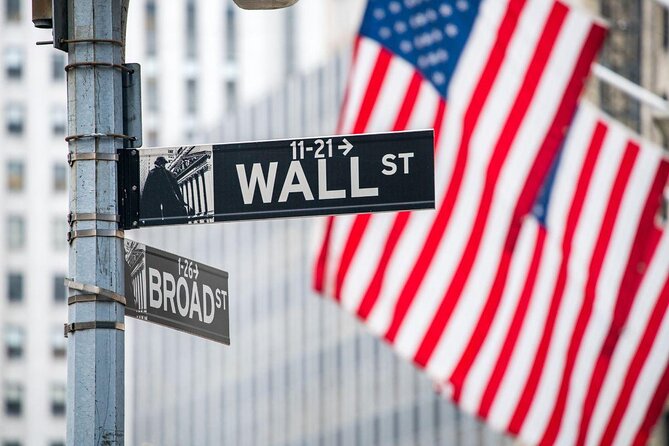
- Oldest-to-newest history in one tight loop, from Battery Park to Fraunces Tavern
- Peter Minuit’s $24 beads story at the start, with a clear sense of how Manhattan changed hands
- Fearless Girl explained alongside Charging Bull, including why it became controversial
- Federal Hall and Hamilton in the same time zone of power: inaugural oaths, then the duel
- A look at global finance from the sidewalk at Wall Street and the New York Stock Exchange
- Stone Street and the first-paved-street vibe, plus what’s literally under the pavement
From beads to bulls: how this tour makes Lower Manhattan make sense
This is the kind of Wall Street history tour that helps you read the Financial District like a map. You’re not just taking photos of famous spots. You’re learning why those spots exist where they do—and how the city’s identity flipped from Dutch colony to British colony to American powerhouse.
The big value here is the way the tour stitches together three themes as you walk: control of land, control of government, and control of money. Battery Park sets up the land story. Federal Hall and Hamilton carry the government story. Wall Street, the NYSE, and the Federal Reserve pull the money story into focus.
And because the group is limited to 10 people, you’re less likely to feel like a name tag in a human line. If you’re the sort of person who asks questions and wants straight answers, this format tends to work well.
If you get Tom as your guide, you’ll likely appreciate the extra attention. One group experience I’m drawing from had Tom answering questions for engaged nephews and even allowing extra time when the group was small. That matches the tour’s small-group design: the guide can actually respond, instead of rushing to fit every stop like a checklist.
You can also read our reviews of more walking tours in New York City



Battery Park and the legend of Peter Minuit’s $24 beads

Your walk starts at 1 State St near Battery Park, and the mood shifts fast—from modern city blocks to the very early Dutch era. The anchor story at the beginning is Peter Minuit’s fabled purchase of Manhattan for $24 in beads. Even if you already know the basic outline, this stop works because it frames the idea of “transfer” of land as a turning point, not just a trivia fact.
Here’s what I’d pay attention to: how that story sets up everything you’ll see next. The tour uses this moment to explain that Manhattan wasn’t always an American city with American institutions. It was a place that different powers competed for, with control changing hands over time.
It’s also a good start because Battery Park is open enough to orient yourself. You get a clean mental baseline for where you are before the sidewalks start steering you into the denser Financial District.
The Alexander Hamilton U.S. Custom House: when forts and empires overlap
Next you’ll move to the Alexander Hamilton U.S. Custom House area. This stop is built around a simple but powerful idea: this ground has been used before. You’ll pass by a site where a fort stood as early as 1625, then follow how the area shifted from Dutch control to British control, and later became an emblem of American history.
One reason I like this stop is that it doesn’t treat history like a series of sealed display cases. It explains how layers pile up. In Lower Manhattan, that’s the real feeling: cities reuse space because it’s valuable, not because it’s sentimental.
A small practical note: this kind of stop is short (about ten minutes), so don’t be shy about asking your guide what to picture. If you want to get the most out of a site like this, you’ll do best when you can connect the present building to the earlier function the tour describes.
Bowling Green’s oldest park and its original 1773 fence
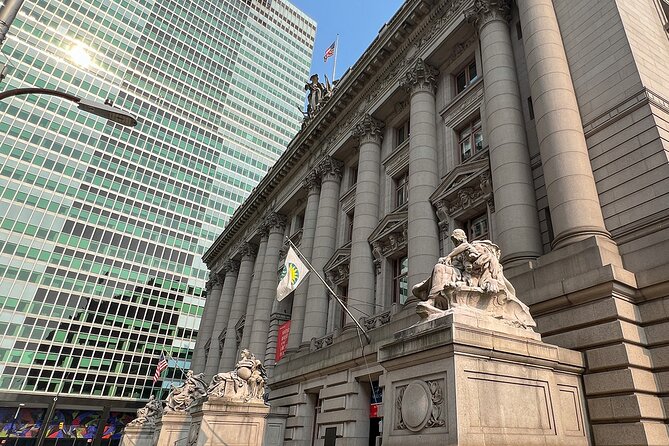
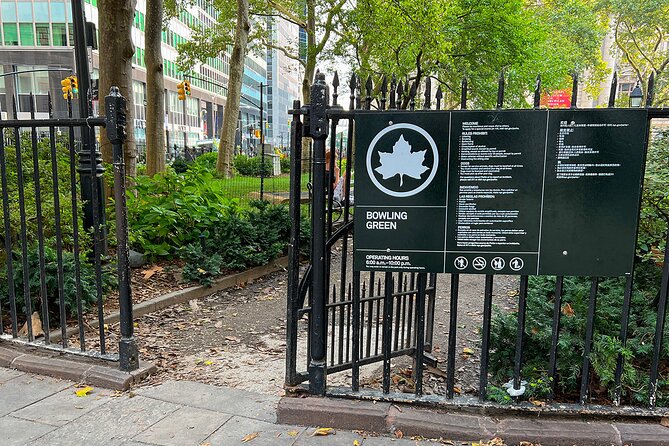
Then you hit Bowling Green, the city’s oldest park. The tour highlights it with a key detail: the original 1773 fence. That’s the kind of thing you can actually see, which helps you feel the age without needing special equipment.
This stop is quick, but it matters. Parks anchor cities the way old streets anchor routes. Bowling Green isn’t just a place to rest; it’s a clue to how early civic planning looked in New York.
If you’re thinking ahead about what to photograph, aim for angles that show both the street energy and the park edge. The fence detail gives you something specific to look for besides generic skyline shots.
Charging Bull and Fearless Girl: street art politics in sculpture form
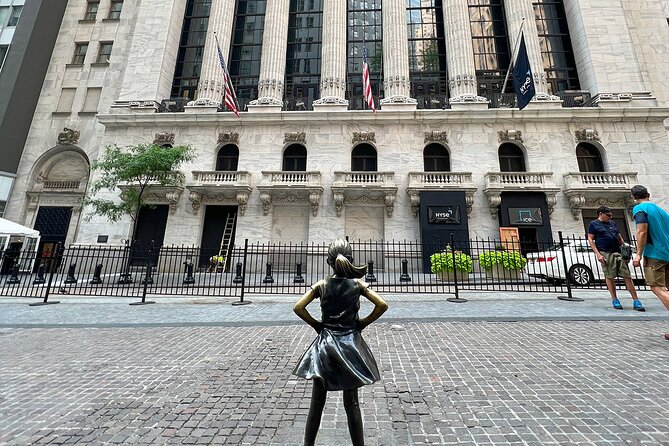
At Charging Bull, the tour brings in one of the most famous visual debates of modern Wall Street: the Charging Bull statue and the story of Fearless Girl. The tour also notes that this pairing came with controversy, which makes sense if you think about how symbolic the public art became.
Here’s what I think is useful: you’ll learn to look at the sculpture as more than a background prop. It’s part of a communication battle about power—what Wall Street wants to project, and what some people say it should be forced to admit.
If you’re visiting on a busy day, Charging Bull can be crowded, but the small group limit helps you keep your bearings. You won’t just stand there stuck behind everyone else trying to hear your guide.
You can also read our reviews of more historical tours in New York City






Alexander Hamilton’s gravesite: the duel with Aaron Burr, in plain street context
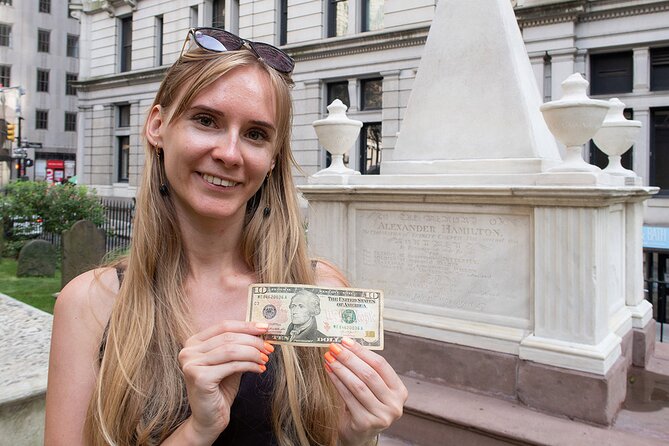
From the bull, you’ll walk to Alexander Hamilton’s gravesite, tied to the first Secretary of the Treasury. The tour connects Hamilton to a gripping personal story: his death in a duel with Vice President Aaron Burr.
This is a stop that can change how you interpret the Hamilton U.S. Custom House earlier. Suddenly Hamilton isn’t just a name you see on buildings. He’s part of the human drama that followed the early formation of the United States.
If you like “how the myth formed” history, this is also a good moment to ask how the guide frames the duel story—because it’s easy to remember duels as Hollywood. A guided walk helps you bring it back to real stakes and real consequences.
Down Wall Street: the name origin and the street you can’t ignore
Next up is Wall Street itself, where you’ll walk and learn about the origin of its name. This stop is brief, but it’s a high impact stretch because it forces you to slow down and treat the street as history, not just a corridor.
One thing I like about this portion is the balance. You don’t get only “finance facts.” You get a quick origin story that helps you understand why the street became shorthand for money power.
If you’re used to seeing Wall Street from a distance (films, photos, social media), this stop brings it closer. Even if you’re not into finance, you’ll recognize the street layout and why it’s been so influential.
The New York Stock Exchange: grandeur from the sidewalk
You’ll then stand near the New York Stock Exchange, with the tour framing it as a symbol of the global financial powerhouse. The key here isn’t architecture trivia for its own sake. It’s context—why this building carries such weight in the way people talk about money worldwide.
Even if you only know the basics about stocks, the guided explanation gives you language to connect the building to the idea of global capital. That makes your photos feel earned, not random.
This is also a good stop for questions, because you can ask how the guide sees the role of Wall Street changing over time. The tour’s small size makes it easier to get a direct answer instead of a one-size-fits-all summary.
Federal Hall: where Washington took office and the first capital took shape
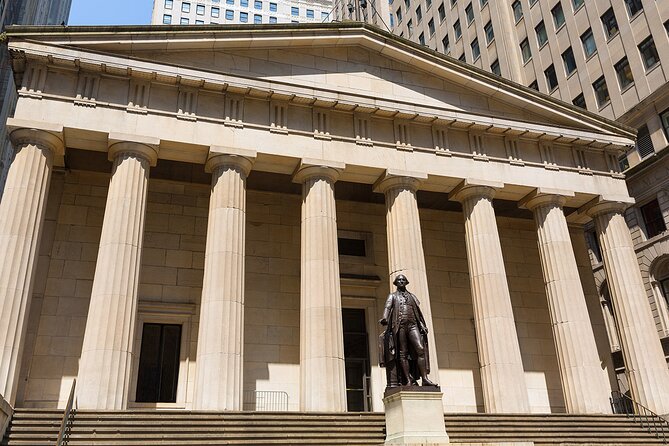
At Federal Hall, the tour highlights the moment when George Washington’s inaugural oath resounded. You’ll also hear that it served as the country’s first capital.
This is the stop where Lower Manhattan’s story shifts from power to government. You go from markets and money to the formal beginnings of national leadership. It’s a reminder that the same streets that later fed finance were once tied to founding institutions.
If you want a simple “why it matters” takeaway: Federal Hall helps you see the city as more than a commercial engine. It’s also where the early American system tried to define itself in public.
The Federal Reserve Bank: gold under your feet
Then comes a stop that feels like a plot twist: the Federal Reserve Bank of New York building, with the tour describing $400 billion of gold beneath its foundations.
You don’t have to be a finance nerd to find this striking. It’s one of those facts that makes you realize how literal the connection is between money and place. The tour uses this to connect modern financial authority to physical infrastructure—something you can picture even if you don’t have the keys.
This stop also pairs well with the NYSE visit. Together, they show two sides of the same system: public markets and centralized financial control.
Stone Street: the first paved street and the payoff of the walk
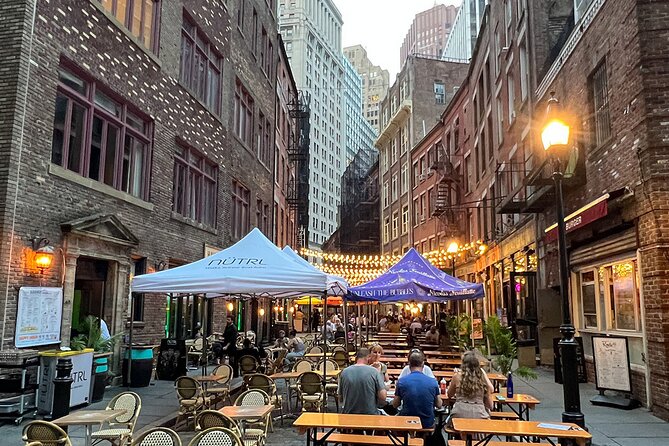
Walking further, you reach Stone Street, introduced as the city’s very first paved street. The tour notes that you’ll now find cafes and an exuberant street life there.
This part is a nice mental reset. After looking at institutions tied to power, you get a street that’s about everyday life. It’s also a great moment to step back and notice the difference between “history as an explanation” and “history as a still-used street.”
If you want to make this your mini-break, it’s a good place to do it. You’ll have a chance to regroup, hydrate if needed, and look at storefront activity the way locals do—without feeling like you’re breaking the tour flow.
Portal Down to Old New York: footprints of a tavern and old City Hall remnants
Next is Portal Down to Old New York, where the tour focuses on the footprints of a 17th-century tavern and remnants of the old City Hall of New Amsterdam.
This is a stop that rewards curiosity. You’re literally being invited to think about what existed here before the current city identity. It’s also a reminder that Lower Manhattan keeps secrets under sidewalks, not just in museums.
Because the stop is around ten minutes, you’ll want to listen closely to how the guide frames what you can and can’t see. The “what’s left” matters here. It turns a quick pause into a meaningful connection to the city’s layered past.
Fraunces Tavern Museum: Washington’s farewell and the oldest tavern in New York
You end at Fraunces Tavern Museum, described as the oldest tavern in New York. The tour ties this site to George Washington’s farewell to his officers.
This is a strong ending because it shifts the tone from political and financial power to human conversation and military relationships. Taverns were where people negotiated in real life—where information traveled and bonds formed. Ending here makes the history feel social, not just structural.
It also gives you a nice “circle closing” effect. You started with a land transfer story and you end with a farewell tied to the founding generation. That arc helps you remember the tour as a narrative, not a list of famous addresses.
Price and logistics: why $30 feels fair here
The price is $30 per person, and the tour lasts about two hours. For a walking tour packed with major landmarks—NYSE, Wall Street, Federal Hall, Charging Bull, and more—that’s solid value, especially because the stops are listed as free admissions for the visit points.
Where the money really goes is into the guide’s ability to connect the dots. A tour like this only works if the guide can explain why these sites matter and how they fit together. The guide performance can make or break it, and the small-group cap (max 10) usually helps the guide tailor attention to the people in front of them.
You’ll also want to plan around the fact that it runs in good weather. If conditions are poor, you may be offered a different date or a full refund. That’s worth considering if you’re traveling in a season where storms happen often.
Who should book this Lower Manhattan history walk
This tour fits best if you like your history practical and street-level. You’ll enjoy it if you want to understand what you’re looking at around Wall Street, even if you don’t know the difference between a stock index and a bond.
It’s also great for:
- First-time visitors who want to get their bearings fast in the Financial District
- People who like founding-era stories tied to real places
- Families or small groups who want questions answered without a crowd pressure cooker
If you’re the type who only wants ticketed museum time, you might feel the walking pace is a lot. But if you like stepping through the city’s evolution on foot, this is a strong format.
Should you book this Wall Street and Lower Manhattan History Walking Tour?
I’d book it if your goal is to understand Lower Manhattan as a story: land transfer, government formation, and the rise of finance. The tour’s biggest strength is how it mixes major named sites with concrete, visible details—like the 1773 fence in Bowling Green, the first paved street at Stone Street, and the idea of gold beneath the Federal Reserve.
I’d skip or reconsider if you’re looking for long indoor stops or a museum-heavy itinerary. This is a walk-first experience, and it leans on guided interpretation more than extended self-guided exploring.
If you book, bring comfortable shoes, keep your questions ready, and let the guide turn famous names into a route you can actually remember.
FAQ
How long is the Wall Street and Lower Manhattan history walking tour?
It lasts about 2 hours.
Where does the tour start and end?
The tour starts at 1 State St, New York, NY 10004, and ends back at the meeting point.
How many people are in a group?
The tour has a maximum of 10 travelers.
Is the tour ticket mobile?
Yes, the tour uses a mobile ticket.
Are there admission fees at the stops?
The listed stops show Admission Ticket Free.
Does the tour run in any weather?
It requires good weather. If it’s canceled due to poor weather, you’ll be offered a different date or a full refund.