REVIEW · NEW YORK CITY
Central Park Pedicab Tour with Natural History Museum Access
Book on Viator →Operated by Experience NYC™ · Bookable on Viator
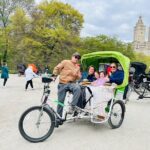
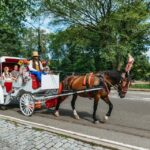
A pedicab can turn Central Park into a sprint. This private, English-speaking tour helps you hit major sights without the usual walking grind, with an optional American Museum of Natural History add-on if you want more after the park. My favorite part is the fast coverage in about an hour, while still getting real guidance on what you’re seeing.
I also like the photo-stop rhythm. You’ll pause for key landmarks like Bethesda Fountain, Bow Bridge, and Strawberry Fields, and your guide ties in memorable stories from films and TV spots along the way. Names like Moni, Ali, Noah, and Max show up in guide experiences, and they get praised for keeping the ride upbeat and the stops well-timed.
One consideration: the tour is built to pack a lot in, so you may wish you had a few extra minutes at your single favorite spot. If you go in cold weather, Central Park can feel sharp fast too. Some rides include blankets, but layers are still a smart call.
In This Review
- Key highlights worth planning around
- Why a Central Park pedicab tour fits a tight schedule
- Meeting at Alwyn Court and what “private” changes
- The ride through Central Park: Carousel, Wollman Rink, Zoo, and big-screen cues
- Bethesda Fountain: the first major landmark stop
- Bow Bridge and the cast-iron “romance lane”
- Cherry Hill: calm pause with Friends pop-culture ties
- Strawberry Fields and John Lennon: peace, mosaic, and the Dakota area
- A meaningful photo break: Balto and the sled-dog lesson
- American Museum of Natural History upgrade: what you gain and how to plan your time
- Making the most of the 1-hour pace (and avoiding the common regret)
- Price and value: how $50 fits (or doesn’t) for you
- Practical tips: what to wear, what to bring, and how to get great photos
- Who should book this Central Park pedicab with museum access
- Should you book this tour?
- FAQ
- How long is the Central Park pedicab tour?
- Is this tour private?
- What language is the tour offered in?
- Where does the tour start?
- Where does the tour end?
- What does the American Museum of Natural History upgrade include?
- Do you need tickets for the Central Park stops?
- What happens if the weather is bad?
- Can I get a full refund if I cancel?
- Are service animals allowed?
Key highlights worth planning around
- Private pedicab comfort that keeps your group together while you move through the park efficiently
- Icon stops with real pause time, including Bethesda Fountain and Bow Bridge
- Movie and TV filming connections at recognizable spots like the Plaza Hotel and Wollman Rink
- Strawberry Fields and the John Lennon Memorial for a meaningful, peaceful break
- Balto statue context tied to the 1925 diphtheria medicine delivery in Alaska
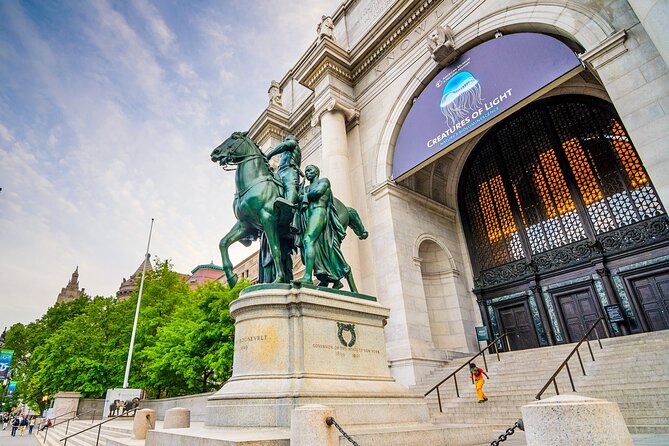
- Optional American Museum of Natural History entry with drop-off at the entrance
Why a Central Park pedicab tour fits a tight schedule
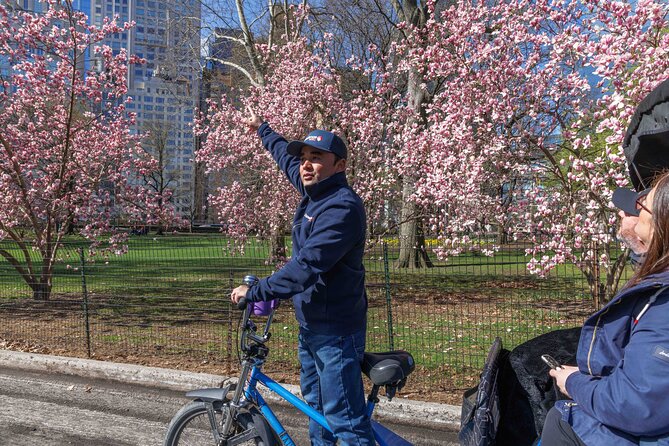
Central Park is big. Even if you love walking, doing it “the scenic way” can eat hours. This pedicab approach is all about getting the look, the landmarks, and the stories while keeping the clock under control.
You cover the park by riding, then you slow down only when it matters—at the spots you’ll want photos and context for. In practical terms, that means less time figuring out routes, fewer sore legs, and more time enjoying the park in manageable chunks.
The big bonus is the optional American Museum of Natural History add-on. If you’re already a museum person (or you have kids who would rather trade park strolling for dinosaurs and oceans), you can extend the experience without losing the flow.
You can also read our reviews of more historical tours in New York City

Meeting at Alwyn Court and what “private” changes
The meeting point is Alwyn Court at 180 W 58th St. That’s a convenient Midtown starting area, especially if you’re staying near central Manhattan sights.
This is a private tour, so it’s only your group. That matters for two reasons. First, your guide can pace the ride to your energy level. Second, you can keep your group together more easily than with shared tours that blend everyone’s preferences.
You’ll also get a mobile ticket, which is helpful on a day when you might already be using apps for transit and museum entry elsewhere. The tour is offered in English, so you won’t have language gaps in the storytelling parts.
At the end, the activity finishes in a different location. If you choose the museum upgrade, you’re dropped at the American Museum of Natural History entrance. If you don’t choose the upgrade, you’ll still end elsewhere, so plan for a second transit step afterward.
The ride through Central Park: Carousel, Wollman Rink, Zoo, and big-screen cues
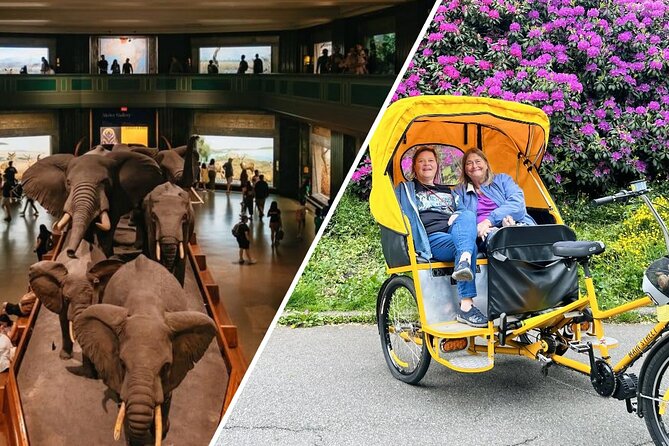
The tour starts as you enter Central Park and your guide begins with history, hidden stories, and fun facts. This is the part that sets expectations: you’re not just passing scenery—you’re learning what you’re looking at.
Then you get a string of recognizable stops as you move through the park:
- The Central Park Carousel, dating back to 1871, with a story about its hand-carved horses. If you think you know it only as a tourist landmark, the background gives it more weight.
- The Wollman Rink, known for winter skating and seasonal events. It’s also tied to movie moments—so your guide points out why it shows up on screen.
- A view toward the Plaza Hotel, famously featured in Home Alone 2, plus facts on its storied past and present-day status.
- A pass by the Central Park Zoo, which is connected to Madagascar. Even if you don’t stop to visit the animals, you get the “why this place matters” angle.
- The Balto statue, with the dramatic backstory of the 1925 diphtheria outbreak in Alaska and the sled dog who helped deliver life-saving medicine. This is one of those stops that turns a photo spot into a real lesson.
As you ride along the eastern edge of the park, you’ll also catch glimpses of the Upper East Side, one of New York’s most classic, elegant neighborhoods. It’s a nice visual change of pace, especially if your day is mostly inside museum rooms or busy street corners.
A couple of practical notes here. One is that this section is where you’ll feel the “pedicab magic” most: you see more ground without constant stopping. The other is that if you’re prone to motion discomfort, the ride is still short and controlled, but you’ll want to sit where you feel steady.
Bethesda Fountain: the first major landmark stop
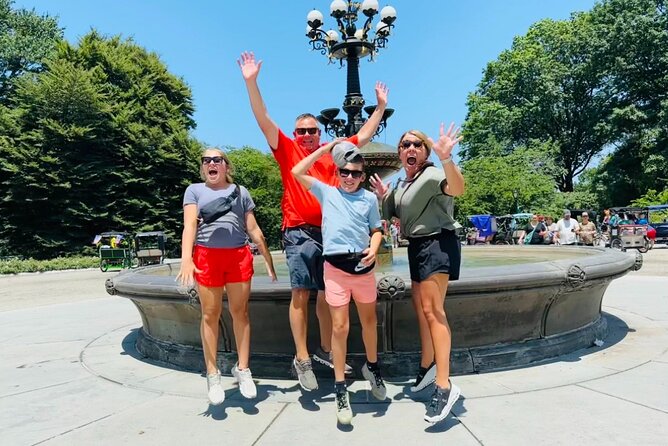
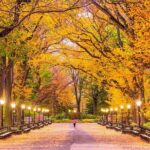
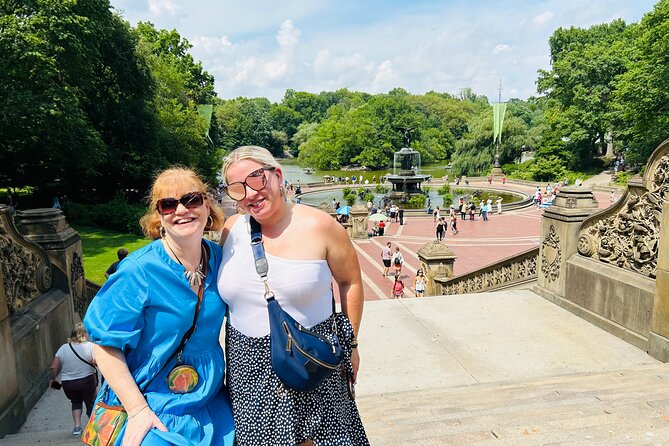
Bethesda Fountain is one of Central Park’s signature landmarks for a reason, and this stop is built to let you appreciate it instead of rushing past. You arrive, then your guide shares the history and points out the architecture around you, plus the setting near Terrace and Lake.
You also get a photo stop, with views toward the Lake and by the famous Angel of the Waters statue. It’s one of those places where the scenery is dramatic even if you’re not trying to stage a shot. The added context helps you recognize why the fountain is so often used in film and TV.
The tour route lists an admission ticket included for this stop. In your planning, treat it as part of what you’re already covered for on this guided experience, not as something you need to chase on your own.
Bow Bridge and the cast-iron “romance lane”
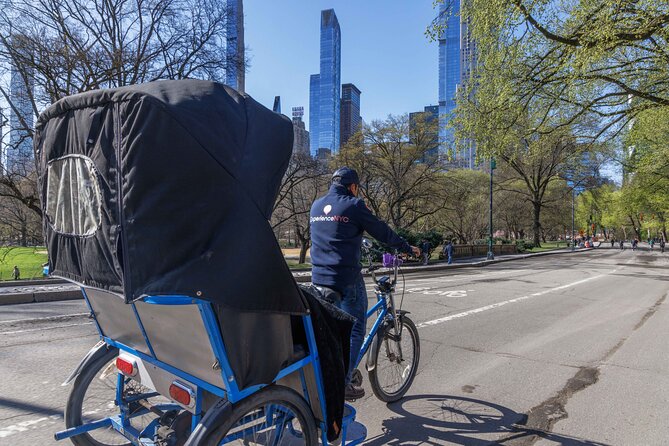
Next up: Bow Bridge, one of Central Park’s most photographed and romantic locations. The guide frames it with history and the reason it shows up so often in filming. You’ll also get sweeping views over the Lake, which is exactly why it’s popular.
Bow Bridge is a great stop if you like New York visuals. It’s not just scenic; it’s also a shortcut into the park’s “storybook” vibe. The route notes an admission ticket included for this stop, so again, you’re not expected to figure out extra steps while you’re there.
From a pacing standpoint, this is a nice midpoint. You’ve already seen the broad set of sights, and now you get the kind of landmark that makes you stop mid-sentence and just look.
You can also read our reviews of more museum experiences in New York City



Cherry Hill: calm pause with Friends pop-culture ties
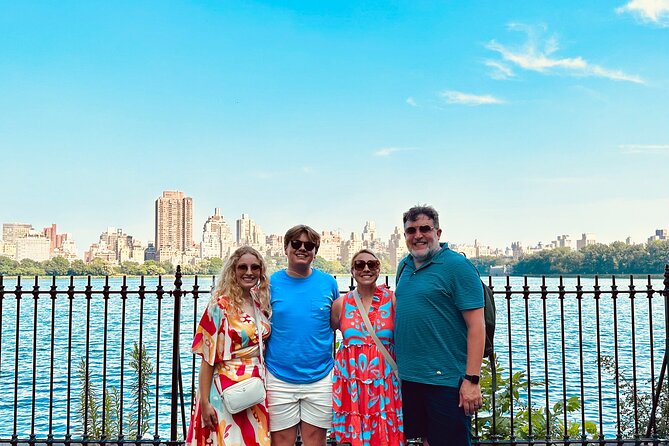
Then you arrive at Cherry Hill, a quieter overlook that gives you another Lake view without the same level of big landmark crowds. Your guide ties it to its spring identity—cherry trees blooming—and also to a TV connection: the fountain from Friends.
The stop includes about 5 minutes and the route lists it as admission ticket free. Even if you’re not a TV watcher, it’s still a good “reset” moment. If the earlier stops felt like a nonstop movie montage, this one is more about atmosphere and photos.
Strawberry Fields and John Lennon: peace, mosaic, and the Dakota area
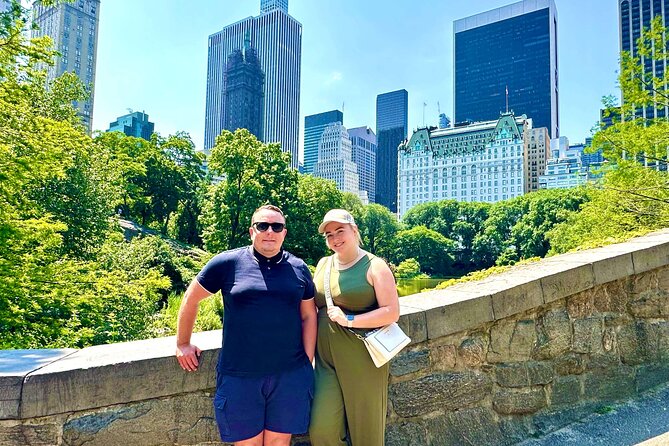
After Cherry Hill, you’ll reach Strawberry Fields, the John Lennon Memorial near the Dakota Building, where Lennon lived. This stop is different in tone from the more playful filming points earlier in the ride.
Your guide shares the story behind the memorial and Lennon’s legacy in New York. You’ll be able to see the iconic Imagine mosaic, and the whole area has a peaceful feel built into it.
This stop is listed as admission ticket free and is timed for about 5 minutes. That’s just enough time to take it in respectfully and get your bearings—without dragging the moment out longer than the tour schedule allows.
A meaningful photo break: Balto and the sled-dog lesson
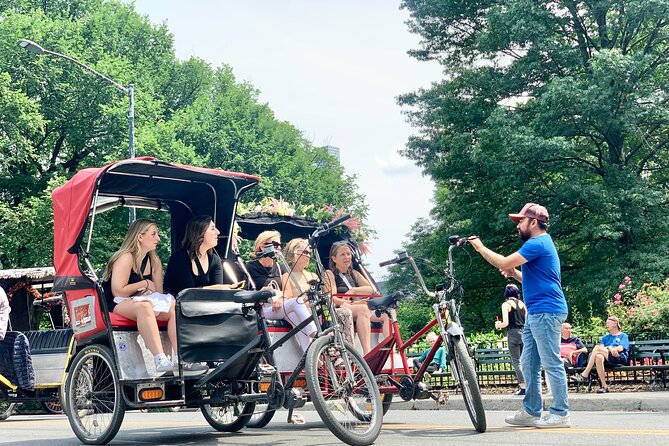
Balto is more than a statue you pass for a picture. The guide provides the key context: the 1925 diphtheria outbreak in Alaska, and how medicine delivery depended on heroic sled dog efforts.
This is a good example of what makes the guided format worth it. If you saw the statue on your own, you might not know why it matters. On this ride, you get the why before you raise your camera.
It’s also an easy win for families. The story is dramatic but understandable, and it lands well even with younger kids.
American Museum of Natural History upgrade: what you gain and how to plan your time
At the end of your tour, if you choose the upgrade, you get dropped off directly at the American Museum of Natural History entrance, with included entry tickets. That means you can head straight into the museum after your park ride, instead of figuring out transit timing or purchasing tickets separately.
The museum route you get access to covers big-name themes—dinosaurs, space, ocean life, and more. Even if you don’t have a full museum plan, those categories help you choose a path once you’re inside.
One thing to watch: the tour portion itself is still about an hour. The upgrade is about access and drop-off, not a guaranteed guided museum walkthrough. So if you want museum guidance, you might still want to decide in advance which halls you care about most.
If you’re traveling with a mix of adults and kids, this upgrade often works well because it gives everyone a clear “second chapter.” Adults get museum depth. Kids get high-energy subjects.
Making the most of the 1-hour pace (and avoiding the common regret)
A 1-hour tour forces tradeoffs. You can’t expect long museum-style lingering at each stop. The best way to avoid disappointment is to pick your must-see list before you go.
Here’s the practical mindset I’d use:
- If your top goal is landmark photos plus storytelling, this pacing is a win.
- If your goal is to spend 30 minutes at one spot (like only Bow Bridge, for example), you may feel rushed.
That tradeoff showed up in at least one kind of feedback where someone wanted fewer stops to enjoy more time in their favorites. I’d treat this as a hint to set expectations: this is a highlight run with short photo pauses, not a slow wandering tour.
Weather matters too. One experience described the ride as magical in snow, but cold is real. Even with blankets mentioned, you’ll want layers and warm outerwear. Central Park breezes can surprise you when you’re dressed for the city streets.
Price and value: how $50 fits (or doesn’t) for you
At $50 per person for a private pedicab experience, the value mostly comes down to what you’re buying: time saved and guidance added.
If you’re trying to cover major landmarks in a short window, the pedicab is doing the heavy lifting. You’re not just paying for a ride; you’re paying for a route that hits carousel, bridges, memorials, and museum access in one go.
I think it’s especially strong if:
- You want a family-friendly format that doesn’t rely on everyone walking nonstop.
- You’d rather pay to be guided than spend your own time planning a park route.
- You’re adding the museum upgrade and want a clean transition to get inside the American Museum of Natural History.
It’s less of a slam dunk if you’re the type who hates photo-stop hopping and would rather spend a whole afternoon wandering freely. In that case, you’d probably do better with a self-guided plan and a longer time window.
Practical tips: what to wear, what to bring, and how to get great photos
Central Park weather can swing. Plan for that, especially if you’re going in winter or shoulders seasons. Even with blankets mentioned in some experiences, you’ll be outside for the ride and stops.
Bring basics that keep you flexible:
- A warm layer for wind and shade.
- Sunglasses and water in warmer months.
- Phone storage or a small power bank so you don’t run out mid-photos.
For photos, remember: many of the best angles at stops like Bow Bridge and Bethesda Fountain depend on timing and positioning. Your guide’s job is to get you into the right place for a quick pause, so listen when they suggest where to stand.
Who should book this Central Park pedicab with museum access
This is a good match if you:
- Want to see a lot of Central Park in a short time without constant walking.
- Appreciate film and TV references, especially ones tied to real locations like Home Alone 2 and Madagascar.
- Want a memorable, meaningful stop at Strawberry Fields and the John Lennon Memorial.
- Might want to switch from park sightseeing to a museum visit right away.
It can also be a great family choice. A guide name like Moni comes up with praise for staying safe and keeping two pedicabs close when riding with kids. That kind of practical attention makes a difference when you’re traveling with children.
Should you book this tour?
If your goal is a high-impact Central Park tour that trades walking time for standout landmarks, I’d say yes. The private format, the structured photo stops, and the option to roll straight into the American Museum of Natural History make it a smart day plan.
I’d only hesitate if you want a slow, pick-one-place-and-sink-into-it kind of experience. This tour is designed for coverage, not for long lingering. If that still sounds good to you, book it and treat it like your guided highlight reel—then spend your extra time after the ride exactly where you want.
FAQ
How long is the Central Park pedicab tour?
The tour is listed as about 1 hour.
Is this tour private?
Yes. It’s a private tour/activity, and only your group participates.
What language is the tour offered in?
The tour is offered in English.
Where does the tour start?
The start is at Alwyn Court, 180 W 58th St, New York, NY 10019.
Where does the tour end?
The tour ends in a different location. If you choose the American Museum of Natural History upgrade, you’ll be dropped off at the museum entrance.
What does the American Museum of Natural History upgrade include?
The upgrade includes entry tickets and drop-off directly at the museum entrance.
Do you need tickets for the Central Park stops?
The route lists some stops as admission ticket included (for example Bethesda Fountain and Bow Bridge) and others as admission ticket free (for example Cherry Hill and Strawberry Fields).
What happens if the weather is bad?
This experience requires good weather. If it’s canceled due to poor weather, you’ll be offered a different date or a full refund.
Can I get a full refund if I cancel?
You can cancel up to 24 hours in advance for a full refund. If you cancel less than 24 hours before the start time, the amount paid is not refunded.
Are service animals allowed?
Yes. Service animals are allowed.